Functional analysis is built to do two things at once.
- It treats infinite-dimensional spaces with the same seriousness that linear algebra gives \to ℝ^n.
- It keeps enough geometry to make estimates stable under limits.
A good way to feel what is new, and why the subject is not just “linear algebra with more symbols,” is to watch a statement that is perfectly true in finite dimensions fail, sharply, in infinite dimensions. That failure is not a defect. It is the signal that tells you which hypotheses actually carry the weight.
Value WiFi 7 RouterTri-Band Gaming RouterTP-Link Tri-Band BE11000 Wi-Fi 7 Gaming Router Archer GE650
TP-Link Tri-Band BE11000 Wi-Fi 7 Gaming Router Archer GE650
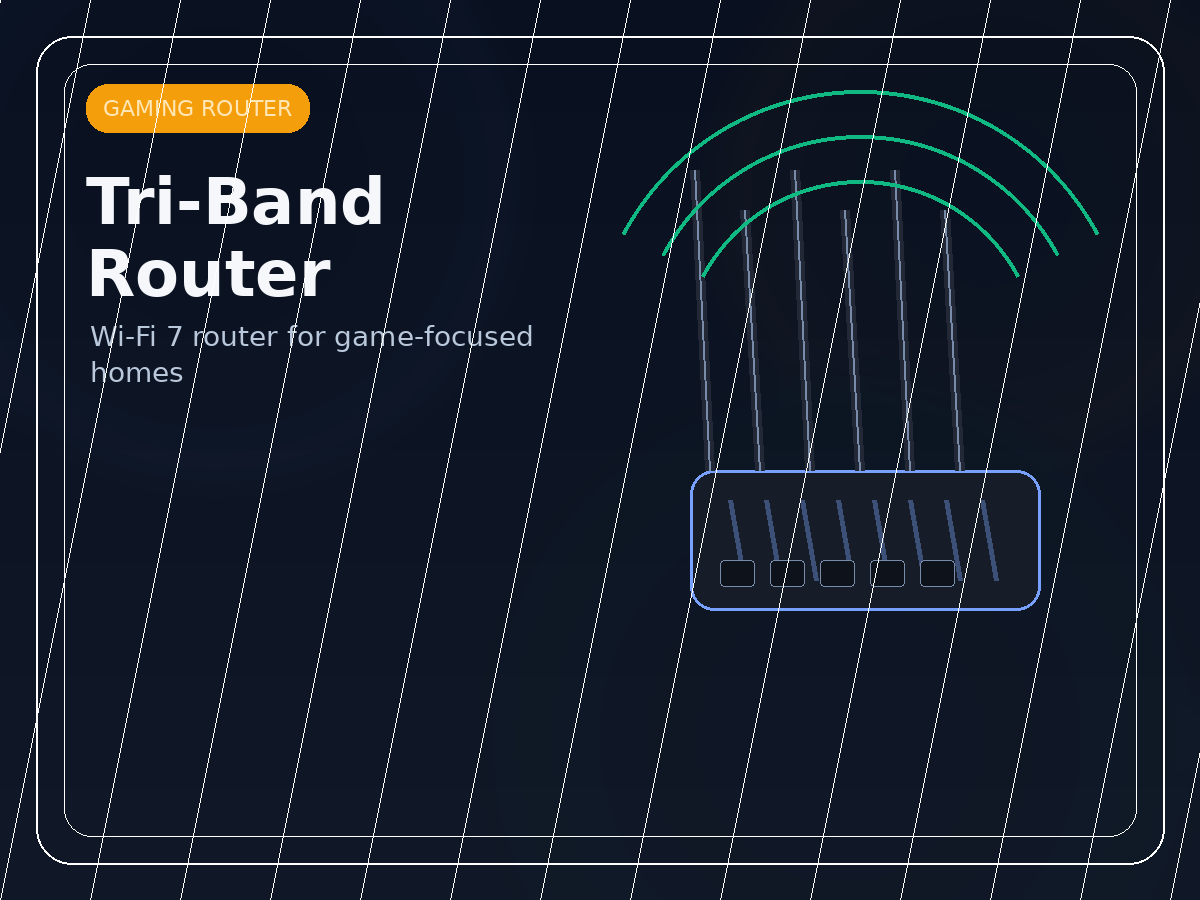
A gaming-router recommendation that fits comparison posts aimed at buyers who want WiFi 7, multi-gig ports, and dedicated gaming features at a lower price than flagship models.
- Tri-band BE11000 WiFi 7
- 320MHz support
- 2 x 5G plus 3 x 2.5G ports
- Dedicated gaming tools
- RGB gaming design
Why it stands out
- More approachable price tier
- Strong gaming-focused networking pitch
- Useful comparison option next to premium routers
Things to know
- Not as extreme as flagship router options
- Software preferences vary by buyer
This article centers on one counterexample that becomes a map. It explains why bounded sets can behave strangely, why “pointwise control” is weaker than it looks, and why the central theorems of the subject are framed the way they are.
The finite-dimensional intuition that breaks
In ℝ^n, any two norms are equivalent. Concretely, if ∥⋅∥_a and ∥⋅∥_b are norms on ℝ^n, then there are constants c,C>0 with
This equivalence has consequences you use without thinking:
- A set is bounded in one norm if and only if it is bounded in any other norm.
- A sequence that is Cauchy in one norm is Cauchy in any other.
- Compactness behaves well: closed and bounded sets are compact.
The counterexample will show that in infinite dimensions, even “obvious” analogues of these facts need new conditions.
The setting: sequences, sup norms, and evaluation maps
Let c_0 be the vector space of real sequences x=(x_1,x_2,\dots) that converge \to 0. Equip it with the sup norm
Then (c_0,\|\cdot\|_\infty) is a Banach space: it is complete.
For each index n, define the linear functional
This is the “nth coordinate evaluation” map. It is linear, and it is continuous because
So $\|\varphi_n\| \le 1$. In fact $\|\varphi_n\|=1$ because $\varphi_n(e^{(n)})=1$ where e^{(n)} is the sequence with a 1 in position n and zeros elsewhere.
Nothing surprising yet.
Now form the partial-sum functionals:
Each T_n is linear. Is it continuous? Yes, because
So $\|T_n\| \le n$. Again, nothing surprising.
The surprise comes when you compare two kinds of boundedness: “pointwise bounded” versus “uniformly bounded as operators.”
Pointwise boundedness is weaker than it looks
Fix some x\in c_0. Since x_k\to 0, the series $\sum_{k=1}^n x_k$ need not converge as n\to\infty, but the partial sums can still be bounded for many sequences. However, there exist sequences in c_0 where the partial sums grow without bound. So the family $\{T_n\}$ is not pointwise bounded on all of c_0.
That is not the example we want, because it is too easy to fail.
Instead, move \to a different space where pointwise boundedness holds automatically, but operator norms can still blow up. The classic choice is C([0,1]), the continuous real-valued functions on [0,1] with the sup norm.
Let
For each n, define the linear functional
This is linear and continuous, with $|L_n(f)|\le 2\|f\|_\infty$, so $\|L_n\|\le 2$. No blow-up.
We need something that can amplify oscillations near a point while still being pointwise controlled for each fixed f.
Consider instead the family of operators
This is the average value of f on [0,1/n] multiplied by n, which makes it behave like an “approximate evaluation at 0.”
For each fixed f, continuity at 0 implies
So for each fixed f, the sequence $\{S_n(f)\}$ converges, hence is bounded. In other words:
- For every f\in X, $\sup_n |S_n(f)| < \infty$.
This is pointwise boundedness of the family $\{S_n\}$ in X^*.
Now compute operator norms. For any f with $\|f\|_\infty\le 1$,
so $\|S_n\|\le 1$. Still no blow-up.
So we have not yet found the failure.
At this point many learners feel stuck, because every “natural” operator you try seems bounded in norm. The way out is to stop seeking a family that is pointwise bounded on the whole space and still has exploding norms, because a theorem says you cannot.
That theorem is the uniform boundedness principle.
The counterexample that teaches functional analysis is a counterexample to what you wish the theorem did not need: completeness.
The counterexample: uniform boundedness fails without completeness
Take X \to be the vector space of continuous functions on [0,1] with the norm
This is a normed space but it is not complete. Its completion is L^1([0,1]).
Define linear functionals
exactly as before, but now interpreted on this new normed space.
Pointwise boundedness still holds
Fix f continuous. Then f is bounded, and f(t)\to f(0) as t\to 0. The same argument gives $T_n(f)\to f(0)$, so $\sup_n |T_n(f)| < \infty$ for each fixed f.
So the family $\{T_n\}$ is pointwise bounded on this normed space X.
Operator norms blow up
Now estimate $\|T_n\|$ as functionals on (X,\|\cdot\|_{L^1}).
By definition,
We want to make T_n(f) large while keeping $\int_0^1 |f|$ small.
Let f_n be the continuous function that is:
- equal \to 1 on [0,1/n]
- decreases linearly from 1 \to 0 on [1/n,2/n]
- equal \to 0 on [2/n,1]
Then f_n is continuous, supported in [0,2/n], and satisfies $0\le f_n\le 1$. Compute:
- $\|f_n\| = \int_0^1 f_n(t)\,dt$ is about $\frac{3}{2n}$ (exactly $\frac{3}{2n}$ with this shape).
- $T_n(f_n) = n\int_0^{1/n} 1\,dt = 1$.
Scale: set
Then $\|g_n\| = 1$, but
Therefore $\|T_n\| \ge \frac{2n}{3}$, which tends to infinity.
So we have:
- For each fixed f, $\sup_n |T_n(f)| < \infty$ (pointwise boundedness).
- But $\sup_n \|T_n\| = \infty$ (no uniform bound).
This is the promised counterexample. It is not a counterexample to the uniform boundedness principle because the hypothesis fails: the space is not Banach.
It is a counterexample to the naive belief that pointwise boundedness should imply uniform boundedness in any normed space.
What this teaches you about the big theorems
The uniform boundedness principle states:
> If X is a Banach space and $\{T_\alpha\}\subset \mathcal{B}(X,Y)$ is a family of bounded linear operators into a normed space Y such that for every x\in X the set $\{\|T_\alpha x\|\}$ is bounded, then $\sup_\alpha \|T_\alpha\| < \infty$.
In dual form (Y=ℝ), it says: a pointwise bounded family of continuous linear functionals on a Banach space is uniformly bounded in operator norm.
Our example shows that completeness is not a decorative hypothesis. It is the hinge.
Why does completeness matter so much? The proof uses the Baire category theorem, which is a completeness phenomenon. The counterexample is engineered to slip through the gap left by the failure of Baire: a union of “small” sets can cover X in a way that cannot happen in a complete metric space.
So you learn a meta-lesson:
- Many theorems of functional analysis are really theorems about completeness expressed through linear operators.
The practical moral: control the right norm
Notice what happened. We changed the norm on the same underlying class of functions. Under the sup norm, $T_n$ had norms bounded by 1. Under the integral norm on continuous functions, the same formula produced unbounded operator norms.
This is not just a trick. It is the core of the subject.
- The same linear map can be benign in one geometry and wild in another.
- Choosing the right topology is choosing which estimates remain stable.
The L^1 norm allows functions with tall, narrow spikes to have small norm. The operator $T_n$ is designed to detect mass very near 0, so it amplifies spikes. Under the sup norm, spikes cannot be tall without paying cost immediately, so amplification is blocked.
Functional analysis is the study of these trade-offs.
How to use this as a research tool
The counterexample becomes a template for thinking, not for copy-pasting.
When you want to test whether a statement is plausible in infinite dimensions, ask questions like:
- What happens if I weaken completeness?
- Can I build a “spike” sequence that has small norm but large effect under the operator I care about?
- Does the phenomenon depend on uniform control or only pointwise control?
To formalize these instincts, you learn standard constructions:
- Approximate identities in convolution spaces.
- Concentration families supported in shrinking neighborhoods.
- Weak convergence sequences that do not converge strongly.
- Compactness failures due to lack of uniform tightness in the relevant topology.
All of these are variations on the same idea: in infinite-dimensional settings, it is possible for mass, oscillation, or complexity to move into directions that your norm barely sees.
A compact summary of the lesson
The counterexample can be summarized in a single line:
- Pointwise boundedness does not force a uniform operator bound unless the domain is complete.
But what you gain is larger than that sentence.
You gain the instinct to distrust statements that sound like finite-dimensional linear algebra unless you can point to the hypothesis that replaces finite-dimensional compactness. Often that hypothesis is one of these:
- completeness (Banach structure),
- reflexivity (weak compactness of the unit ball),
- compactness of an operator (image of the unit ball is relatively compact),
- coercivity or uniform convexity (strong geometric control).
Functional analysis is not about adding hypotheses to be safe. It is about identifying the precise structural property that prevents the kind of escape route the counterexample exploits.
Once you see the escape route, the theorems stop feeling arbitrary. They become the doors that close it.
Books by Drew Higgins


Prophecy and Its Meaning for Today
New Testament Prophecies and Their Meaning for Today
A focused study of New Testament prophecy and why it still matters for believers now.


Leave a Reply