Feedback That Lies: When Learning Signals Point the Wrong Way is for situations where effort does not translate cleanly into results. The purpose is to make the constraint visible, because repeated behavioral problems are often produced by repeated pressures: incentives, overload, uncertainty, social risk, or delayed consequences.
If you want a technical orientation to how constraints shape stable outcomes, start with Research Library. The goal here is practical understanding and better judgment, not turning analogies into proofs.
Value WiFi 7 RouterTri-Band Gaming RouterTP-Link Tri-Band BE11000 Wi-Fi 7 Gaming Router Archer GE650
TP-Link Tri-Band BE11000 Wi-Fi 7 Gaming Router Archer GE650
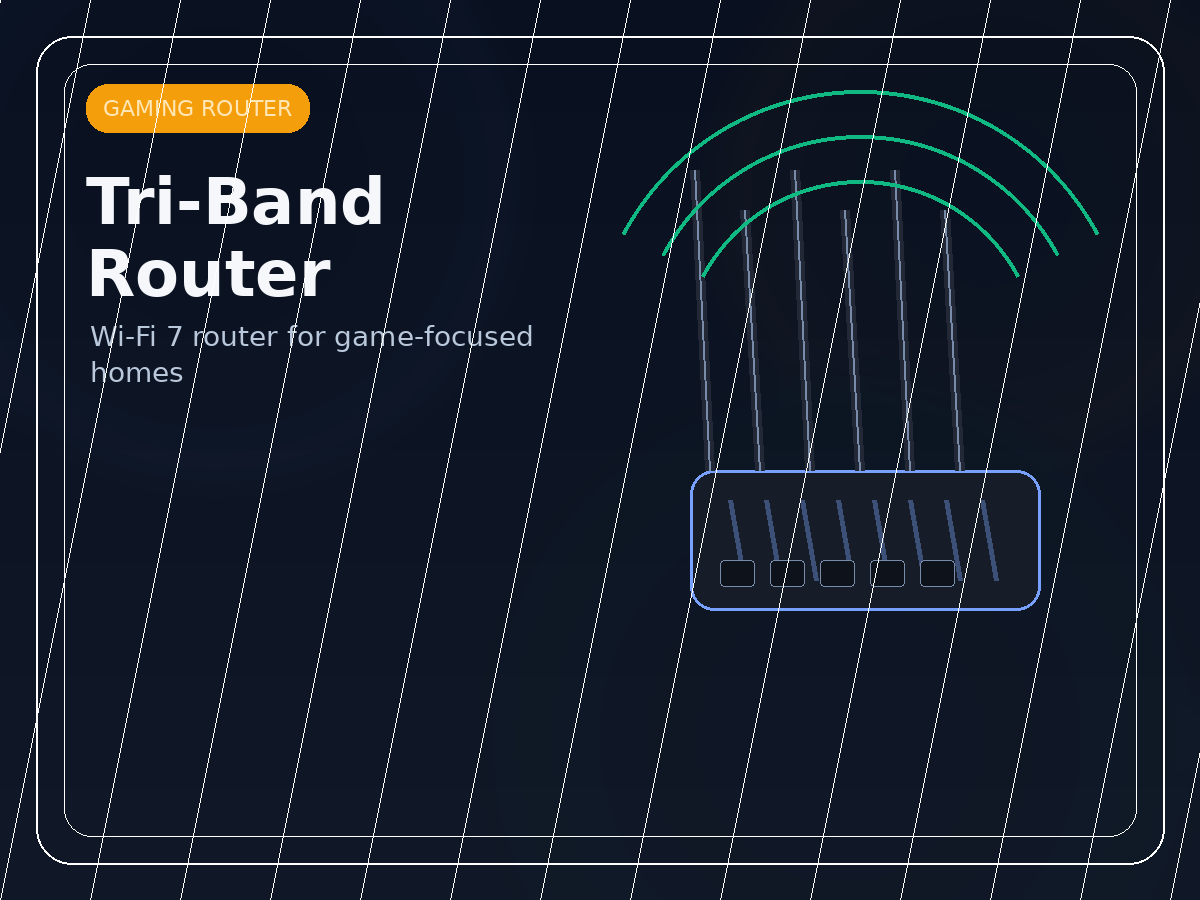
A gaming-router recommendation that fits comparison posts aimed at buyers who want WiFi 7, multi-gig ports, and dedicated gaming features at a lower price than flagship models.
- Tri-band BE11000 WiFi 7
- 320MHz support
- 2 x 5G plus 3 x 2.5G ports
- Dedicated gaming tools
- RGB gaming design
Why it stands out
- More approachable price tier
- Strong gaming-focused networking pitch
- Useful comparison option next to premium routers
Things to know
- Not as extreme as flagship router options
- Software preferences vary by buyer
Key definition
Misleading feedback happens when the signals you receive are not aligned with the outcome you care about, so learning pushes you in the wrong direction.
This definition points you toward the environment. When the same situation repeats, the same kind of choice is invited. Over time, the invitation becomes a habit, and the habit looks like “personality.”
Why this matters in everyday life
Many systems punish truth-telling and reward appearances. In that setting, even honest people learn to manage perception rather than solve problems.
Once feedback lies, trust collapses. People stop believing the dashboards, the reports, and even each other. The work becomes a theater of self-protection.
Clarity here reduces needless moral confusion. You can still speak about right and wrong, but you also gain the power to redesign the situation so the right move is not punished and the wrong move is not rewarded.
How the mechanism works
A metric becomes misleading when it is easier to improve the number than to improve the reality the number was meant to represent.
Feedback can also lie through delay. If consequences arrive months later, the mind connects them to the wrong causes.
When evaluation is punitive, people hide weak signals. That makes the system blind until failure is large and expensive.
Reliable learning requires honest signals, short loops where possible, and space to report problems without being treated as the problem.
Two questions keep you grounded: what is the cheapest move that avoids immediate pain, and what move builds long-term health. Many failures come from treating the first move as wisdom when it is simply survival.
A simple diagnostic is to look for recurring friction. If the same conflict appears in different people, the system is likely producing it. If the same person behaves differently across settings, the setting is shaping the behavior. When you train yourself to see friction as information, you stop arguing only about character and you start adjusting incentives, timing, clarity, and boundaries.
Three patterns to watch for
Misleading feedback has a recognizable profile. The numbers improve while the lived reality worsens.
- People celebrate the metric and quietly ignore the complaints.
- The best performers on the metric are not the best performers on the real goal.
- Work becomes optimized for reporting rather than for serving customers or solving problems.
- Bad news arrives late, in a crisis, because early signals were hidden.
- People learn to argue about measurement instead of learning from it.
When you see these patterns, do not only correct behavior. Also ask what the system is rewarding, what it is hiding, and what it makes too costly to do well.
When the pattern gets toxic
When feedback lies for long enough, the system stops trusting itself. People assume reports are political, so they stop using them to learn.
A second toxic pattern is punishing honesty. If raising a problem leads to blame, people become silent. Silence becomes fragility because the system loses early warning.
Finally, misaligned signals create moral injury. People feel forced to do work that conflicts with what they believe is right. Over time, they detach or leave.
Toxicity usually includes a loss of honest feedback. People either perform confidence or perform outrage, because those are safer than admitting uncertainty. The cure is often a return to truth-telling with clear boundaries.
What helps in practice
A repair begins by reconnecting metrics to outcomes. Ask which numbers predict the real goal and which numbers merely look good.
Then use paired measures: speed and quality, volume and resolution, output and recovery. Pairing makes gaming harder.
Create protected channels for weak signals. A system that can hear small problems can prevent big problems.
Finally, practice revision. Metrics should be treated as tools, not as sacred. When tools stop helping, you change them.
When you change a measurement, communicate why. People panic when they think the rules will change again next week. A stable rule with occasional thoughtful revision builds trust. Also create a place for story-level feedback: what people are seeing on the ground. Numbers without narrative often hide the reason the number changed, and that hides what should be fixed.
Healthy change usually looks smaller than you expect. It is a shift in defaults, a shift in incentives, or a shift in feedback that makes the good path easier to repeat.
If you are unsure where to start, run a small experiment for a short window. Pick one change you can measure, keep it simple, and decide ahead of time what would count as improvement. Then review what happened without blaming. Even a modest improvement can reveal the real levers, and it can build confidence that the system can learn rather than only react.
A quick self-check
If performance looks better while reality worsens, these questions help you locate the misalignment.
- Does improving the metric reliably improve the outcome we actually care about?
- How could a person improve this metric while harming the real goal?
- Where is the feedback delayed, and what does that delay hide?
- Is reporting safe, or does bad news create punishment?
- What paired measure would reveal distortion quickly?
If you can answer these questions plainly, you can usually choose a response that reduces conflict and increases learning. If you cannot answer them, the first step may be gathering better information rather than forcing a decision.
Pressure, default response, better move
| Pressure | Default Response | Better Move |
|---|---|---|
| Metric is easier than reality | Optimize the number | Tie measurement to outcome and add quality checks |
| Consequences are delayed | Learn the wrong lesson | Shorten loops and track leading indicators |
| Punitive evaluation | Hide weak signals | Create protected reporting and reward early truth |
The better move is rarely magical. It usually reduces uncertainty, reduces hidden cost, or reduces the need for constant negotiation. When those burdens shrink, people have more room to choose wisely and to cooperate without fear.
Another way to see it is this: the better move raises the chance that the next person can do the right thing without needing unusual courage. It turns good behavior into a normal path, not a heroic exception.
A concrete scenario
A customer support team is rewarded for short call times. Agents learn to rush callers off the phone. Call times improve, but customer satisfaction falls and repeat calls rise.
What the scenario reveals
The agents are responding to the rule. The rule teaches them what the system truly values, even if leaders say they value customer care.
The feedback loop also hides the real cost. The harm appears later as repeat work, frustration, and churn, which are not connected to the agent’s immediate decision.
A repair aligns signals with outcomes: measure resolution quality, track repeat calls, and make it safe for agents to report what prevents real help.
Once the forces are named, the next step is alignment: the goal you praise should match the goal you reward, and the goal you reward should be measurable in a way that does not train deception.
Common misread and correction
Common misread: when metrics are gamed, the main problem is dishonest people.
Correction: people often adapt to what is rewarded; if the signal is misaligned, the system trains gaming even in sincere workers.
That correction changes what you do next. You stop relying only on speeches and scolding. You introduce structures that protect good behavior and expose the costs of bad behavior without destroying dignity.
Practical takeaways
- Before you set a metric, write down how it could be gamed and how you will detect that.
- Pair speed metrics with quality metrics so the number cannot be improved by harm.
- Shorten feedback loops where possible so learning connects to real outcomes.
- Make it safe to report weak signals early, because early truth is cheaper than late collapse.
- Regularly revisit whether the signals still predict what matters, especially after incentives change.
The goal is not perfection. The goal is repeatable improvement: fewer predictable failures, faster learning, and more trust that honesty will not be used as a weapon.
Where to go next
If you want nearby topics that stay close to this theme, these are good next reads:
- Behavioral Science Under Constraints: Decisions, Learning, and Coordination
- Exploration vs Exploitation: Learning When Trials Are Expensive
- Time Inconsistency: Why We Break Plans and How Commitment Helps
- Incentives and Metrics: The Hidden Tax of What You Measure
Helpful next step
For a useful step in a different direction, go here: Aging as Constraint Accumulation: When Repair Costs Rise. The purpose is intuition about stability and recovery under constraints, not proof.
One outside reference for background
Books by Drew Higgins


Bible Study / Spiritual Warfare
Ephesians 6 Field Guide: Spiritual Warfare and the Full Armor of God
Spiritual warfare is real—but it was never meant to turn your life into panic, obsession, or…