Why Honest People Disagree: Priors, Values, and Missing Shared Tests This page explains why honest people disagree: different starting assumptions, values, and missing shared tests. The purpose is to help you locate the real fork in the road instead of arguing past it.
A lot of disagreement is real disagreement. But a surprising amount is just two people answering two different questions with the same words.
Premium Audio PickWireless ANC Over-Ear HeadphonesBeats Studio Pro Premium Wireless Over-Ear Headphones
Beats Studio Pro Premium Wireless Over-Ear Headphones
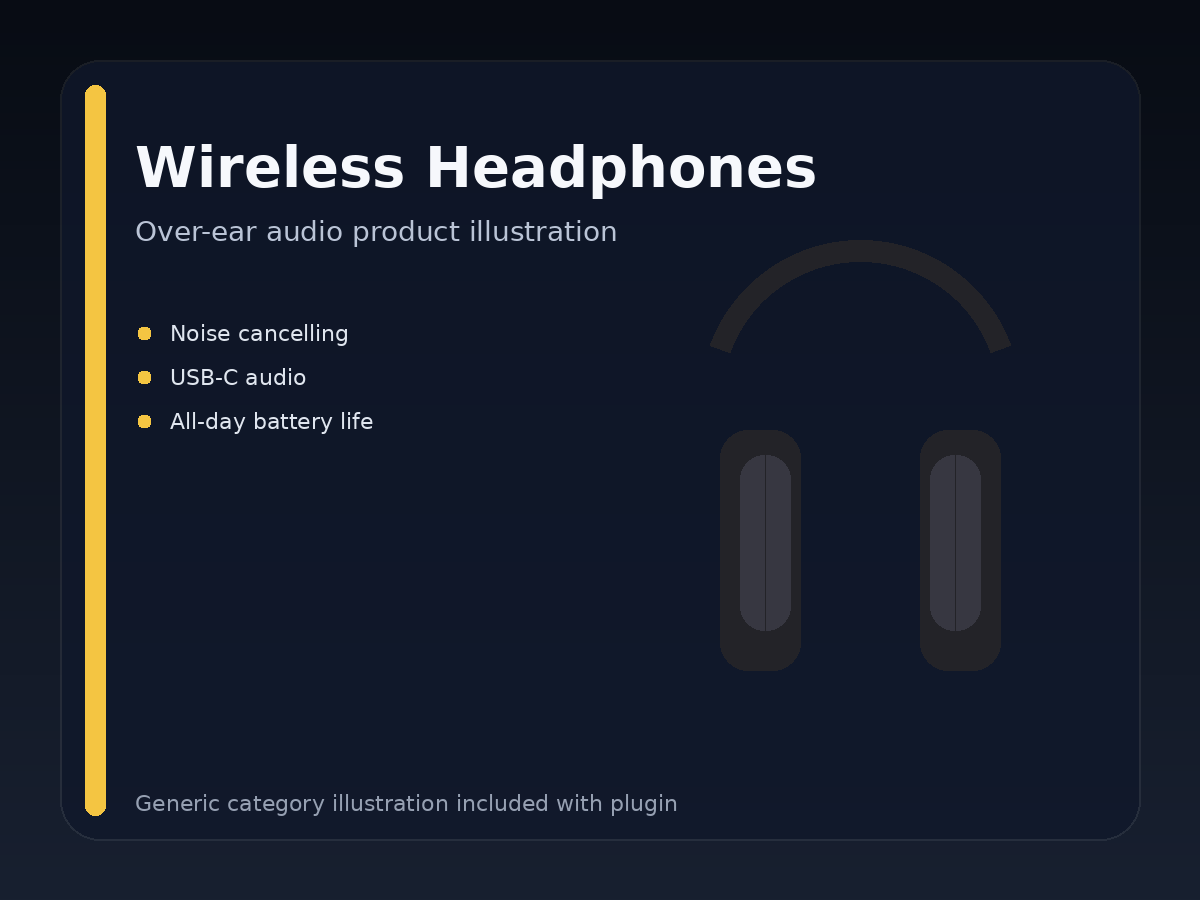
A broad consumer-audio pick for music, travel, work, mobile-device, and entertainment pages where a premium wireless headphone recommendation fits naturally.
- Wireless over-ear design
- Active Noise Cancelling and Transparency mode
- USB-C lossless audio support
- Up to 40-hour battery life
- Apple and Android compatibility
Why it stands out
- Broad consumer appeal beyond gaming
- Easy fit for music, travel, and tech pages
- Strong feature hook with ANC and USB-C audio
Things to know
- Premium-price category
- Sound preferences are personal
Clarity is not about sounding smarter. It is about making sure the words you use actually touch the thing you are talking about.
You don’t need a philosophy degree for this; you only need the willingness to separate what you know from what you hope.
For deeper technical material that is meant to be inspected, start with the Research Library. For the wider human frame that keeps inquiry grounded, Being Human is the best companion.
What this page is for
People can disagree sincerely because they start with different background assumptions, weigh costs differently, or rely on different kinds of evidence. Honest disagreement is often a sign of missing shared tests, not of bad character.
You’ll see a clean definition, a deeper unpacking, a concrete scenario, a correction to a common misread, and then a short set of next steps.
Key definitions
- Prior assumptions: starting beliefs that shape how you interpret new information
- Values: what you treat as most important when tradeoffs exist
- Shared test: an agreed way to check a claim that both sides respect
Going deeper
Clarity point 1
Different priors create different readings of the same data
A clean way to keep yourself honest is to separate three layers: the claim, the reasons for the claim, and the conditions where the claim might fail. When those layers blur, confidence can rise while accuracy falls.
When you tighten a definition, you lose some easy slogans. But you gain something better: you gain the ability to tell the difference between an idea that is merely attractive and an idea that survives contact with reality.
If a conversation is going in circles, that is data. Circles usually mean the terms are shifting, the goal is unclear, or the evidence being offered cannot actually touch the claim being made.
Even when a claim is not directly measurable, it can still have consequences that are. The art is to find the consequence that would change if the claim were false, and to take that consequence seriously.
In practice, clarity is often a matter of asking one more question than you want to ask. Not an aggressive question, but a patient one: “What exactly would make that statement wrong?”
A practical check: can you state the claim in a way that someone who disagrees would still recognize as fair? If not, you may be fighting a caricature instead of the real issue.
A second check: if the claim were false, would anything in your day-to-day expectations change? If nothing would change, you may be treating the claim as a badge rather than as a guide.
Clarity point 2
Different values change what counts as a ‘good’ outcome
Even when a claim is not directly measurable, it can still have consequences that are. The art is to find the consequence that would change if the claim were false, and to take that consequence seriously.
When you tighten a definition, you lose some easy slogans. But you gain something better: you gain the ability to tell the difference between an idea that is merely attractive and an idea that survives contact with reality.
If a conversation is going in circles, that is data. Circles usually mean the terms are shifting, the goal is unclear, or the evidence being offered cannot actually touch the claim being made.
A clean way to keep yourself honest is to separate three layers: the claim, the reasons for the claim, and the conditions where the claim might fail. When those layers blur, confidence can rise while accuracy falls.
Good reasoning is rarely dramatic. It is mostly small, boring discipline: naming assumptions, checking alternatives, and refusing to treat strong feelings as strong evidence.
A practical check: can you state the claim in a way that someone who disagrees would still recognize as fair? If not, you may be fighting a caricature instead of the real issue.
A second check: if the claim were false, would anything in your day-to-day expectations change? If nothing would change, you may be treating the claim as a badge rather than as a guide.
Clarity point 3
Missing shared tests turns debate into repeating conclusions
When you tighten a definition, you lose some easy slogans. But you gain something better: you gain the ability to tell the difference between an idea that is merely attractive and an idea that survives contact with reality.
A clean way to keep yourself honest is to separate three layers: the claim, the reasons for the claim, and the conditions where the claim might fail. When those layers blur, confidence can rise while accuracy falls.
If a conversation is going in circles, that is data. Circles usually mean the terms are shifting, the goal is unclear, or the evidence being offered cannot actually touch the claim being made.
Good reasoning is rarely dramatic. It is mostly small, boring discipline: naming assumptions, checking alternatives, and refusing to treat strong feelings as strong evidence.
Even when a claim is not directly measurable, it can still have consequences that are. The art is to find the consequence that would change if the claim were false, and to take that consequence seriously.
A practical check: can you state the claim in a way that someone who disagrees would still recognize as fair? If not, you may be fighting a caricature instead of the real issue.
A second check: if the claim were false, would anything in your day-to-day expectations change? If nothing would change, you may be treating the claim as a badge rather than as a guide.
Clarity point 4
A bridge practice: name the shared ground and the exact point of divergence
Good reasoning is rarely dramatic. It is mostly small, boring discipline: naming assumptions, checking alternatives, and refusing to treat strong feelings as strong evidence.
A clean way to keep yourself honest is to separate three layers: the claim, the reasons for the claim, and the conditions where the claim might fail. When those layers blur, confidence can rise while accuracy falls.
When you tighten a definition, you lose some easy slogans. But you gain something better: you gain the ability to tell the difference between an idea that is merely attractive and an idea that survives contact with reality.
If a conversation is going in circles, that is data. Circles usually mean the terms are shifting, the goal is unclear, or the evidence being offered cannot actually touch the claim being made.
In practice, clarity is often a matter of asking one more question than you want to ask. Not an aggressive question, but a patient one: “What exactly would make that statement wrong?”
A practical check: can you state the claim in a way that someone who disagrees would still recognize as fair? If not, you may be fighting a caricature instead of the real issue.
A second check: if the claim were false, would anything in your day-to-day expectations change? If nothing would change, you may be treating the claim as a badge rather than as a guide.
How to use this today
You can keep your dignity while changing your mind. In fact, the willingness to revise is one of the clearest signs that you are aiming at truth rather than at status.
If you can’t run a test, you can still improve your position by narrowing what you’re asserting. Smaller, clearer claims are easier to check and easier to correct.
Try this in everyday conversations: when someone makes a strong claim, ask whether they are offering a description, a prediction, a value judgment, or a plan. Each of those needs a different kind of support.
When the cost of being wrong is low, act and learn. When the cost of being wrong is high, slow down and demand stronger support. That is not cowardice; it is wisdom.
When evidence is offered, ask whether it is a sample, an anecdote, a controlled comparison, or a repeatable check. Treat each with the respect it deserves, without pretending they all have the same force.
If you notice yourself reacting strongly, pause and write a one-sentence version of the claim you are reacting to. Often the sentence you feared is not the sentence the other person meant.
- Name the type of claim: description, prediction, value judgment, or plan.
- Restate the claim without the most controversial word.
- State what would count as a meaningful check.
- List at least one alternative explanation that could also fit the facts.
- Say what would change your mind, even if you think it is unlikely.
- Match your confidence to your support.
- Choose the smallest next step that keeps learning possible.
Questions people ask
Is this just arguing about words?
Sometimes it is, and that is exactly the point. If the words are unstable, the reasoning built on them will also be unstable. Clarifying terms is not a distraction; it is a repair.
If you keep that posture—clear terms, honest limits, and real willingness to learn—you’ll find that even hard topics become more navigable.
Do I need to run experiments for everything?
No. Many claims are too broad or too expensive to test directly. But you can usually narrow the claim or identify consequences that are testable. That keeps your thinking anchored.
If you keep that posture—clear terms, honest limits, and real willingness to learn—you’ll find that even hard topics become more navigable.
What if the other person refuses to define anything?
Then you have learned something important: you may not be in a conversation aimed at clarity. You can still speak kindly, but you don’t have to pretend that the exchange is producing knowledge.
If you keep that posture—clear terms, honest limits, and real willingness to learn—you’ll find that even hard topics become more navigable.
How do I stay confident without being arrogant?
Tie confidence to reasons. Speak clearly about what you know and what you’re still learning. That kind of confidence is steady because it is honest.
If you keep that posture—clear terms, honest limits, and real willingness to learn—you’ll find that even hard topics become more navigable.
What if I later discover I was wrong?
That is not failure. It is growth. The goal is not to never revise; the goal is to revise for good reasons and to do it without self-protective drama.
If you keep that posture—clear terms, honest limits, and real willingness to learn—you’ll find that even hard topics become more navigable.
How this connects to the rest of the site
One theme running through the science side of this site is that constraints can create stability. The philosophical version of that idea is simple: clear boundaries on meaning and evidence create stability in conversation.
When you treat illustrations as illustrations and proofs as proofs, you protect both. You keep intuition from pretending to be certainty, and you keep technical work from being dismissed as mere metaphor.
If you want the most formal material, the Research Library is built to be inspected. If you want the human reason for caring about inspection, Being Human carries that thread.
Clarity is not a luxury. It is the difference between learning and drifting. It is the difference between disagreement that sharpens understanding and disagreement that only hardens identity.
A concrete scenario
Two people read the same economic report. One focuses on stability and long-term effects. The other focuses on immediate relief. Both care about people, but they prioritize different risks. Without naming those priorities, they will keep accusing each other of blindness.
Notice how the shift from slogans to levers changes the conversation. Once you name what kind of claim is being made, you can ask the right kind of question: what would confirm it, what would weaken it, and what would change if it were wrong.
A common misread and a correction
Misread: “If someone disagrees, they must be irrational or dishonest.”
Correction: Disagreement often reflects different starting points or goals. Clarity about those can soften conflict and sharpen inquiry.
The point of the correction is not to score points. It is to keep your words connected to reality so that your confidence matches your support.
Where to go next
- Big picture guide: Meaning, truth, and checkable claims
- Argument vs Rhetoric: How To Tell Reasons From Pressure
- Probability, Confidence, and Certainty: Saying What You Actually Know
Helpful next step
If you want a concrete way to see how constraints, incentives, and limited information shape real choices, this is a useful next step: Behavioral Science Under Constraints: Decisions, Learning, and Coordination.
Books by Drew Higgins


Christian Living / Encouragement
God’s Promises in the Bible for Difficult Times
A Scripture-based reminder of God’s promises for believers walking through hardship and uncertainty.
