A lot of geometry is built on a comforting principle: every smooth manifold looks like Euclidean space when you zoom in far enough. In Riemannian geometry, you can push that comfort further: in normal coordinates, the metric looks Euclidean at a point and the first derivatives vanish. If you add “curvature zero” \to the story, it can feel like you should be back in the plane for real.
The flat torus is the counterexample that breaks that intuition cleanly. It is locally indistinguishable from the Euclidean plane, yet globally it is not the plane in any meaningful geometric sense. Once you internalize what goes wrong, you stop trying to prove global statements by local computations alone, and you start keeping a small set of global invariants on your desk at all \times.
Value WiFi 7 RouterTri-Band Gaming RouterTP-Link Tri-Band BE11000 Wi-Fi 7 Gaming Router Archer GE650
TP-Link Tri-Band BE11000 Wi-Fi 7 Gaming Router Archer GE650
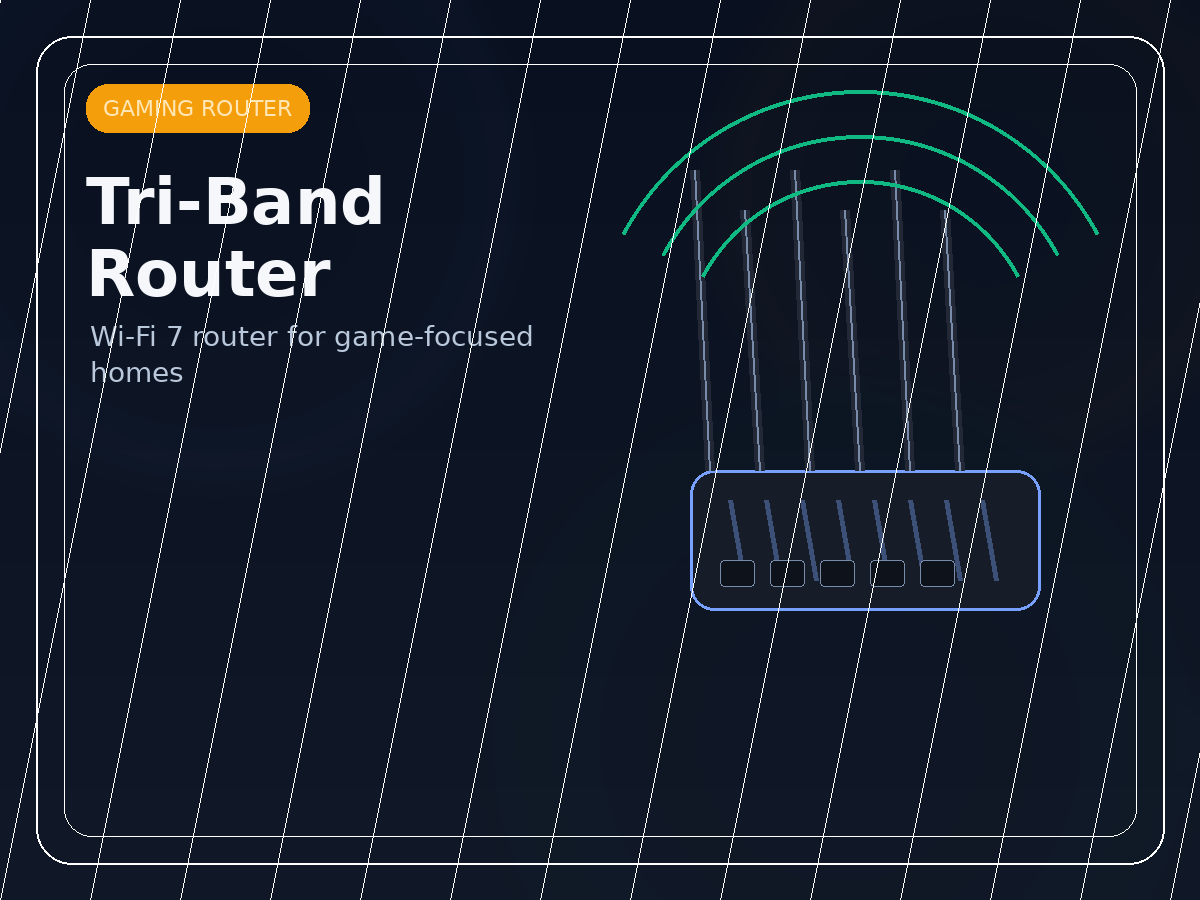
A gaming-router recommendation that fits comparison posts aimed at buyers who want WiFi 7, multi-gig ports, and dedicated gaming features at a lower price than flagship models.
- Tri-band BE11000 WiFi 7
- 320MHz support
- 2 x 5G plus 3 x 2.5G ports
- Dedicated gaming tools
- RGB gaming design
Why it stands out
- More approachable price tier
- Strong gaming-focused networking pitch
- Useful comparison option next to premium routers
Things to know
- Not as extreme as flagship router options
- Software preferences vary by buyer
The setup: what “locally Euclidean” really means
A Riemannian manifold $(M,g)$ is a smooth manifold $M$ together with an inner product $g_p$ on each tangent space $T_pM$, varying smoothly with $p$. In a coordinate chart $(U,x^1,\dots,x^n)$, the metric is written
Two points about “local Euclidean behavior” are easy to mix up:
- Chart-level Euclideanity: every point has coordinates, so locally $M$ is a \subset of $\mathbb R^n$. This is topology and smooth structure.
- Metric-level Euclideanity: the metric looks like the Euclidean metric up \to a prescribed order when expressed in a good chart. This is geometry.
Normal coordinates around a point $p$ are the geometric expression of zooming in. In normal coordinates,
- $g_{ij}(p)=\delta_{ij}$,
- $\partial_k g_{ij}(p)=0$.
Curvature is a second-order invariant. So if curvature vanishes everywhere, it is tempting to think there is no geometric obstruction \left.
The flat torus shows the missing ingredient: global identification can preserve local metric data while changing the global shape completely.
Building the flat torus from the plane
Start with the Euclidean plane $\mathbb R^2$ with coordinates $(x,y)$ and the standard metric
Fix the integer lattice $\mathbb Z^2\subset \mathbb R^2$ acting by translations:
Translations preserve $g_\mathrm{E}$. So we can form the quotient
and inherit a well-defined Riemannian metric $g$ on $\mathbb T^2$ by declaring the quotient map $\pi:\mathbb R^2\to\mathbb T^2$ \to be a local isometry.
Geometrically, this is the “glue opposite sides of a unit square” construction. Every point on the torus has a neighborhood that lifts isometrically \to a neighborhood in $\mathbb R^2$. No stretching, no bending, no curvature.
In particular:
- The Gaussian curvature is $0$ everywhere.
- Every small patch is literally a Euclidean patch, up to relabeling by $\pi$.
- Geodesics in $\mathbb T^2$ are projections of straight lines in $\mathbb R^2$.
So where is the difference hiding?
What the torus has that the plane cannot: closed geodesics
Take the straight line in $\mathbb R^2$
It is a geodesic in $\mathbb R^2$. Project it down:
Because $(1,0)\in\mathbb Z^2$, we have $\pi(t,0)=\pi(t+1,0)$. So $\bar\gamma$ is periodic:
It is a closed geodesic on $\mathbb T^2$.
The Euclidean plane has no closed geodesics. Straight lines never come back. That single observation already blocks any global isometry $\mathbb T^2\to\mathbb R^2$: an isometry sends geodesics to geodesics, and it preserves “closedness.”
The same phenomenon appears in many disguises:
- $\mathbb T^2$ has nontrivial loops that cannot be shrunk \to a point, and those loops can often be realized by short geodesics.
- $\mathbb R^2$ is simply connected, so every loop contracts.
- Even though curvature vanishes, topology and global identifications create global constraints on distance-minimizing behavior.
This is the first big lesson: curvature is not the only global obstruction to being Euclidean.
A precise obstruction: fundamental group meets geometry
Topologically,
A global isometry is, in particular, a homeomorphism. So it would induce an isomorphism of fundamental groups. That is impossible here.
If you want a geometric restatement, think in terms of coverings:
- $\pi:\mathbb R^2\to\mathbb T^2$ is a covering map and a local isometry.
- $\mathbb R^2$ is the universal cover of $\mathbb T^2$.
- The deck transformations are exactly $\mathbb Z^2$ translations.
Local geometry lifts perfectly. Global geometry is exactly where the deck transformations matter.
A helpful way to remember this is that local computations cannot see the deck group. Curvature, Christoffel symbols, local coordinate expressions, and normal forms all live downstairs in the quotient just fine.
But global questions, like “is the manifold globally Euclidean,” are sensitive to the covering structure.
Local isometry versus global isometry
The quotient map $\pi$ is a **local isometry**, meaning that for every point $p\in\mathbb R^2$, there is a neighborhood $U$ on which $\pi$ restricts to an isometry onto $\pi(U)\subset \mathbb T^2$.
A local isometry does not have to be injective, and failing injectivity is exactly how global geometry changes.
Here is the local–global split in one table:
| Feature | $\mathbb R^2$ | Flat $\mathbb T^2$ | What local data sees |
|—|—|—|—|
| Curvature | $0$ | $0$ | Sees no difference |
| Small neighborhoods | Euclidean | Euclidean | Sees no difference |
| Closed geodesics | none | many | Global, not local |
| Fundamental group | trivial | $\mathbb Z^2$ | Global, not local |
| Universal cover | itself | $\mathbb R^2$ | Requires global viewpoint |
| Distance growth at infinity | unbounded without wrap | wraps by identification | Global |
If you have ever felt confused by a statement like “zero curvature does not imply Euclidean,” this table is the cure: curvature is local, Euclideanity is global.
A deeper geometric invariant: holonomy can be trivial while topology is not
Holonomy is what happens \to a vector when you parallel transport it around a closed loop. On a simply connected region with zero curvature, holonomy is trivial: you get your vector back unchanged.
On the flat torus, curvature is zero, and parallel transport along loops is still trivial. So holonomy does not distinguish $\mathbb T^2$ from $\mathbb R^2$ in this case.
That is another useful lesson: global geometry has multiple independent “axes” of invariants. Some are sensitive to curvature and connection data; some are purely topological; some combine both.
When you build an argument, you need to know which axis you are operating on.
How this counterexample changes how you prove things
Once you accept the flat torus, several proof habits become dangerous:
- Proving a global classification statement using only local normal forms.
- Inferring a global embedding from local coordinate computations.
- Concluding that “no curvature” means “no geometry.”
Instead, the counterexample suggests a disciplined checklist whenever a statement has a global flavor:
- Ask what the universal cover looks like and what the deck group is doing.
- Check whether the claim should be invariant under passing \to a quotient by isometries.
- Identify what global invariants the claim would force: fundamental group, existence of closed geodesics, volume growth, injectivity radius.
A compact way to phrase the core issue is:
- Local constraints control curvature and infinitesimal behavior.
- Global constraints control how local charts glue together and how geodesics behave at large scale.
The flat torus is the simplest place where those two layers decouple cleanly.
A practical diagnostic move you can reuse
Suppose you are trying to prove something like “if $(M,g)$ has property $P$, then $(M,g)$ is globally isometric \to $\mathbb R^n$.” Before you compute anything, try a diagnostic:
- Does $P$ survive taking a quotient by a discrete group of isometries?
If it does, and if $\mathbb R^n$ has nontrivial quotients (it does, such as tori), then $P$ cannot possibly force global Euclideanity unless $P$ also blocks those quotients by a global invariant.
Curvature $0$ survives. Completeness survives. Many analytic bounds survive. None of them prevent the torus. So they cannot force $\mathbb R^n$.
This move saves time, and it prevents proofs that are doomed from the first line.
The torus also changes large-scale geometry: compactness and growth
There is another geometric difference that is easy to overlook if you only stare at curvature: $\mathbb T^2$ is compact and $\mathbb R^2$ is not. Compactness is not merely topological; it forces metric consequences.
- Every continuous function on $\mathbb T^2$ achieves maxima and minima.
- The diameter of $\mathbb T^2$ is finite: there is a global upper bound on distances.
- There is no way to send $\mathbb T^2$ isometrically onto $\mathbb R^2$ because $\mathbb R^2$ contains points arbitrarily far apart.
Compactness is global and cannot be detected from a single coordinate patch. This is another way the counterexample teaches you the “global hypothesis detector” habit: if a conclusion would force compactness or non-compactness, local calculations will not suffice.
A related metric invariant is the injectivity radius. On $\mathbb T^2$, there is a smallest nontrivial translation length in the lattice. That length controls the shortest noncontractible loops and provides a positive injectivity radius. On $\mathbb R^2$, the injectivity radius is infinite. Again, curvature cannot see this.
A richer geodesic picture: rational and irrational slopes
Because geodesics on the flat torus are projections of straight lines, you can classify many of them by slope.
Take a line $\gamma(t)=(at,bt)$ in $\mathbb R^2$. Its projection $\bar\gamma(t)=\pi(\gamma(t))$ closes up exactly when there is a nonzero $T$ such that $(aT,bT)\in\mathbb Z^2$. That happens precisely when $a/b$ is rational (interpreting $b=0$ as the infinite slope case).
So:
- If the slope is rational, the projected geodesic is closed.
- If the slope is irrational, the projected geodesic never closes and winds around the torus forever.
In fact, irrational-slope geodesics are dense in $\mathbb T^2$. You do not need the full proof to benefit from the intuition: a straight line with irrational slope keeps missing the lattice points needed \to “line up,” so its projection keeps visiting new regions.
This observation strengthens the earlier lesson. The torus does not just have a few closed geodesics; it has an entire arithmetic structure controlling global geodesic behavior. None of that arithmetic appears in local coordinate expansions.
What you should carry forward
The flat torus is not just a neat object. It is a compact summary of how geometry works:
- A manifold can be locally Euclidean in the strongest Riemannian sense and still have a completely different global shape.
- Curvature is not the whole story; topology and identification data matter.
- Local isometries are common; global isometries are rare and require global invariants.
If you keep a single counterexample in your head as you move through geometry, make it this one. It will quietly correct dozens of false inferences before they ever reach the page.
Books by Drew Higgins


Leave a Reply