Algebraic topology is often sold as a toolkit: compute a homology group here, a fundamental group there, and you will “know” a space. That sales pitch works until the first time you meet two spaces that look identical to your favorite invariants and yet are not the same in any reasonable sense. The moment you see such a pair, algebraic topology stops being a bag of tricks and becomes what it really is: a disciplined way to extract structure from spaces, with a sober understanding of what each invariant can and cannot see.
A single counterexample can teach this better than a lecture. The one below is classical, concrete, and endlessly reusable.
Value WiFi 7 RouterTri-Band Gaming RouterTP-Link Tri-Band BE11000 Wi-Fi 7 Gaming Router Archer GE650
TP-Link Tri-Band BE11000 Wi-Fi 7 Gaming Router Archer GE650
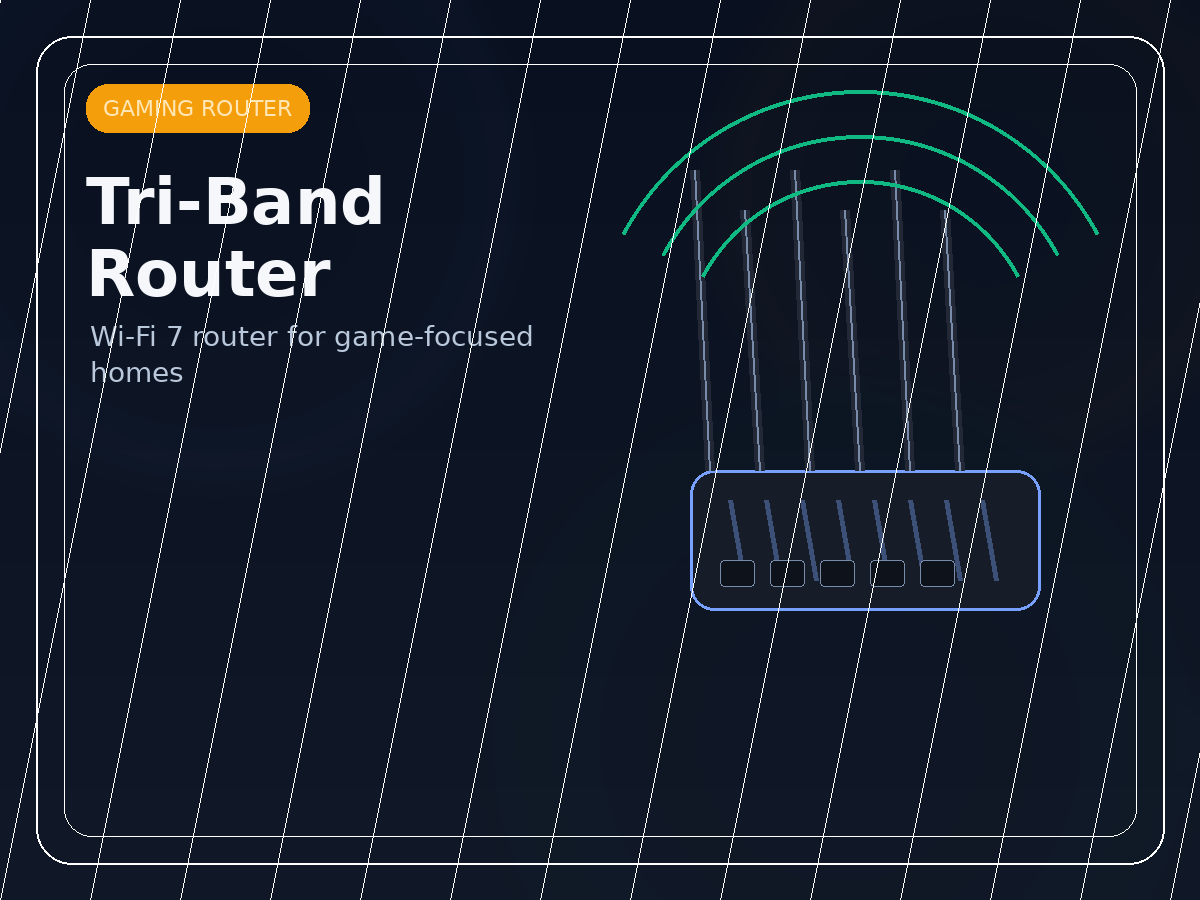
A gaming-router recommendation that fits comparison posts aimed at buyers who want WiFi 7, multi-gig ports, and dedicated gaming features at a lower price than flagship models.
- Tri-band BE11000 WiFi 7
- 320MHz support
- 2 x 5G plus 3 x 2.5G ports
- Dedicated gaming tools
- RGB gaming design
Why it stands out
- More approachable price tier
- Strong gaming-focused networking pitch
- Useful comparison option next to premium routers
Things to know
- Not as extreme as flagship router options
- Software preferences vary by buyer
The naive belief
A common first belief is some variant of this:
- If two spaces have the same homology groups, they are “basically the same.”
- If they also have the same fundamental group, surely they must be the same up to homotopy.
Both statements are false, and the reason they are false is not a technicality. It is a structural lesson: many invariants forget the way cycles sit inside the space, how they link, and how multiplication interacts with geometry.
The counterexample comes from lens spaces.
Lens spaces in one paragraph
Fix an integer $p \ge 2$ and an integer $q$ relatively prime \to $p$. Consider the 3–sphere
Let $\zeta = e^{2\pi i/p}$. Define an action of the cyclic group $\mathbb{Z}/p$ on $S^3$ by
This action is free when $\gcd(p,q)=1$. The quotient space is the lens space $L(p,q)=S^3/(\mathbb{Z}/p)$.
Different values of $q$ can produce spaces that are not homeomorphic and not homotopy equivalent, even though many invariants agree.
What homology sees: the same answer for all $q$
One of the best features of lens spaces is that their homology can be computed from a very small cellular decomposition: one cell in each dimension $0,1,2,3$. You do not need pictures to use this; you need only the resulting cellular chain complex.
With that CW structure, the cellular chain groups are
The boundary maps take the form
For lens spaces, $\partial_3 = 0$, $\partial_1 = 0$, and $\partial_2$ is multiplication by $p$:
That immediately gives the homology.
- $H_0(L(p,q)) \cong \mathbb{Z}$ because the space is connected.
- $H_3(L(p,q)) \cong \mathbb{Z}$ because it is a closed oriented 3–manifold.
- $H_2(L(p,q)) = \ker(\partial_2)/\operatorname{im}(\partial_3) = 0/0 = 0$.
- $H_1(L(p,q)) = \ker(\partial_1)/\operatorname{im}(\partial_2) \cong \mathbb{Z}/p$.
So for every $q$ coprime \to $p$,
The calculation never asked what $q$ is. Homology cannot see it.
That is already a lesson: homology groups are often too coarse to classify spaces.
What the fundamental group sees: also the same answer for all $q$
Because $S^3\to L(p,q)$ is a covering map with deck group $\mathbb{Z}/p$, the fundamental group of the quotient is that deck group:
Again, independent of $q$.
Now we have many different lens spaces $L(p,q)$ with the same homology and the same fundamental group. Are they actually the same?
No.
The punchline: same homology and same $\pi_1$, different space
There are precise classification theorems for lens spaces that tell you exactly when $L(p,q)$ and $L(p,q’)$ are homeomorphic or homotopy equivalent. The important point for a first encounter is not the full theorem, but the existence of pairs $(q,q’)$ that do not match.
For many values of $p$, the lens spaces $L(p,q)$ and $L(p,q’)$ are:
- not homeomorphic,
- and in fact not homotopy equivalent,
even though
One famous concrete pair is $L(7,1)$ and $L(7,2)$. They share the same homology and the same fundamental group, but they are not homeomorphic, and the obstruction comes from additional structure that the basic invariants do not record.
So what does detect the difference?
What is missing: structure beyond group-valued invariants
Homology groups record the existence of cycles “up to boundaries.” They do not record how cycles interact, and they ignore subtle torsion phenomena that live in pairings and ring structures.
For lens spaces, one way to capture what homology misses is through a linking form on torsion homology. In an oriented closed 3–manifold $M$, there is a canonical bilinear pairing
Intuitively, it measures how a torsion 1–cycle “links” with another when you allow rational 2–chains as fillings. Two spaces may have the same torsion group $\mathbb{Z}/p$ but different linking pairings on it.
For $L(p,q)$, this linking form depends on $q$. That dependence survives every invariant that only sees $H_1 \cong \mathbb{Z}/p$ as an abstract group. The lesson is sharp:
- The group $H_1$ remembers “how much torsion.”
- The linking form remembers “how torsion sits inside the manifold.”
Another detector is Reidemeister torsion, an invariant built from chain complexes with extra bases, sensitive to the simple-homotopy type. Lens spaces were among the first spaces where torsion proved its worth: it separates spaces that homology cannot separate.
You do not need to master torsion theory to take the message. You only need to admit the conclusion: there is more structure in a space than the list of its homology groups.
The structural lesson, stated as a checklist
A counterexample is most useful when it changes how you think. Lens spaces should change your default checklist for classification problems.
When someone claims “these spaces are the same,” ask what is being compared.
| What you compute | What it is good at | What it can miss |
|—|—|—|
| $\pi_1$ | detecting non-simply-connectedness, covers, van Kampen decompositions | higher homotopy, torsion refinements, subtle 3–manifold data |
| $H_*(X)$ as groups | coarse shape information, Euler characteristic, connectivity obstructions | cup products, linking pairings, torsion phenomena beyond group isomorphism |
| $H^*(X)$ as a ring | intersections and multiplicative structure, characteristic classes | finer invariants like torsion forms, simple-homotopy sensitivity |
| additional pairings (linking, intersection) | how cycles sit and interact | still not a full classifier in general |
| torsion invariants / simple homotopy tools | distinguishes spaces with same homology and $\pi_1$ | often harder to compute, needs more structure |
The point is not that “nothing works.” The point is that invariants are questions, and the right question depends on what the space is doing.
How to reuse this counterexample in your own work
Lens spaces give you a mental model for what can go wrong in algebraic topology arguments:
- If your proof only uses homology groups as abstract groups, do not claim classification unless you have a reason.
- If your argument uses $\pi_1$ and homology together, remember that 3–manifolds can hide extra structure in torsion pairings.
- If you need a positive classification theorem, look for hypotheses that force “no hidden structure,” such as:
– simply connected CW complexes with control of all homotopy groups (Whitehead-type statements),
– manifolds with extra geometric structures,
– or computations that determine ring structure and characteristic classes, not just groups.
Lens spaces teach you to respect hypotheses.
A small “upgrade path” that keeps you honest
If you want to push beyond the naive belief, a good progression is:
- Start with $H_*(X)$ as groups.
- Upgrade to cohomology ring $H^*(X)$ with cup product.
- Add pairings (intersection forms, linking forms) when torsion is present.
- In settings where simple-homotopy matters, learn where torsion invariants enter.
That progression is not about accumulating tricks. It is about learning what information your current tools are discarding.
Even cohomology groups do not rescue the naive claim
It is tempting to respond: “Fine, homology groups are too coarse; I will compute cohomology instead.” That is a healthy instinct, but lens spaces still teach restraint.
With integer coefficients, the cohomology of $L(p,q)$ is determined by the universal coefficient theorem:
Those groups, like the homology groups, do not depend on $q$. In dimension three, the cup product structure with integer coefficients has limited room to move, so the ring data you can extract at first pass still does not record the difference between $q$–choices.
What changes the situation is adding structure that remembers how torsion is positioned: pairings (like the linking form), local coefficient systems, or torsion-type invariants that are sensitive to how a chain complex is glued together, not merely to its homology.
The real take-away
The best counterexamples do not just say “your statement is false.” They teach you the shape of truth.
Lens spaces teach this shape:
- Many invariants collapse rich structure into a small algebraic shadow.
- Different spaces can cast the same shadow.
- The craft of algebraic topology is choosing invariants that keep exactly the features you need.
Once you internalize that, computations feel less like chores and more like careful experiments: each invariant is a test, each test has a resolution limit, and part of the mathematics is knowing what your test cannot see.
Books by Drew Higgins


Leave a Reply