War is often described as a contest of strength, discipline, and technology. Yet every commander fights inside uncertainty. The enemy’s location, intentions, readiness, and resilience are rarely known with confidence. This is why intelligence has always been a hidden engine of military outcomes. It can compress uncertainty into actionable knowledge, and it can also amplify uncertainty when it is wrong, delayed, or misunderstood.
Military history looks different once you take intelligence seriously. Campaigns that appear “inevitable” often become contingent on what leaders believed at the time. Victories that appear purely tactical may rest on prior knowledge of an enemy’s plan. Disasters that appear like incompetence can be traced to misread signals, deception, or gaps in collection. Intelligence does not replace courage or firepower, but it reshapes how they are used.
Value WiFi 7 RouterTri-Band Gaming RouterTP-Link Tri-Band BE11000 Wi-Fi 7 Gaming Router Archer GE650
TP-Link Tri-Band BE11000 Wi-Fi 7 Gaming Router Archer GE650
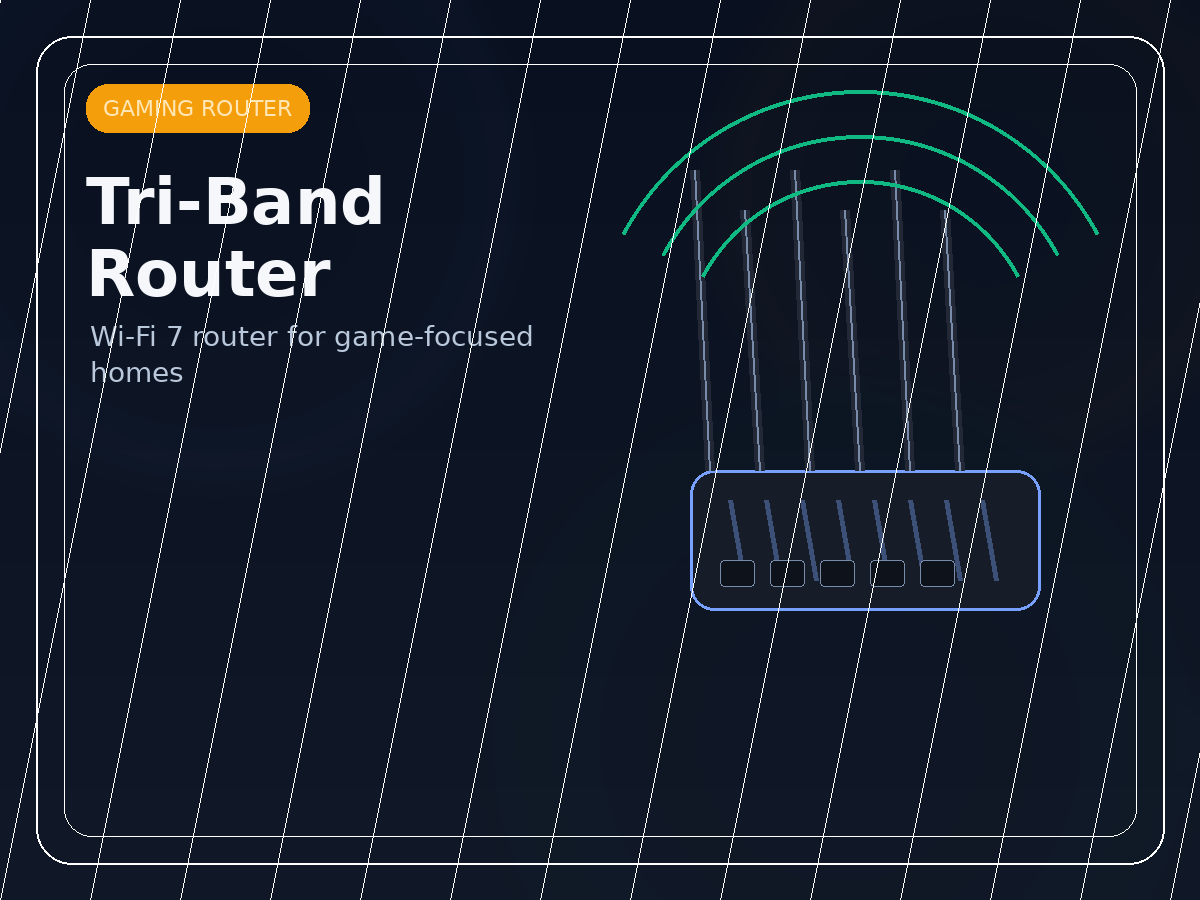
A gaming-router recommendation that fits comparison posts aimed at buyers who want WiFi 7, multi-gig ports, and dedicated gaming features at a lower price than flagship models.
- Tri-band BE11000 WiFi 7
- 320MHz support
- 2 x 5G plus 3 x 2.5G ports
- Dedicated gaming tools
- RGB gaming design
Why it stands out
- More approachable price tier
- Strong gaming-focused networking pitch
- Useful comparison option next to premium routers
Things to know
- Not as extreme as flagship router options
- Software preferences vary by buyer
What intelligence means in military history
Intelligence is not one thing. It is a cycle, and each stage can distort reality.
- Collection: obtaining information through scouts, spies, captured documents, intercepted communications, imagery, or public reports.
- Processing: translating, decoding, organizing, and verifying raw material.
- Analysis: forming judgments, weighing alternatives, estimating risk, and identifying what is most likely.
- Dissemination: delivering conclusions to decision makers in time to matter.
- Feedback: learning what was correct, what was wrong, and what must be collected next.
Because it is a cycle, intelligence can fail in many ways. The collector can be brave but misled. The analyst can be brilliant but lack context. The decision maker can receive accurate warnings and still ignore them because they conflict with preferences, politics, or pride.
The oldest problem: seeing the enemy before the enemy sees you
Long before modern signals, armies relied on reconnaissance, informants, and local knowledge. Even in ancient and medieval worlds, intelligence shaped outcomes by answering the most basic questions.
- Where is the enemy’s main force?
- How quickly can it move?
- What routes are passable?
- Which communities might cooperate, resist, or misdirect?
These questions were not abstract. A commander who misjudged terrain or enemy movement could be ambushed, cut off from water, or forced into a battle at a disadvantage. In steppe warfare, for example, mobility and scouting were inseparable. Horse-based forces depended on wide screens, rapid messaging, and the capacity to locate the enemy while hiding their own main body. In many campaigns, the decisive moment occurred before contact, when one side learned enough to choose where to fight.
Early modern states: diplomats, merchants, and hidden networks
As states expanded their reach through trade and empire, intelligence increasingly moved through networks that were not purely military. Merchants carried news. Diplomats exchanged reports. Religious communities and diaspora groups sometimes became conduits of information, willingly or under pressure. Ports and border towns were both markets and listening posts.
This period also highlights a persistent truth: intelligence is a political activity. States want information, but they also want narratives. Reports can be shaped by what patrons expect to hear. Informants can sell falsehoods. Rival factions can leak or suppress findings to win internal struggles. The historian must therefore read early modern intelligence with the same caution used for propaganda, because the line between the two was often thin.
The arrival of signals: when communication becomes a battlefield
Once armies depended on coded communication, intelligence gained an entirely new terrain. Intercepting, decoding, and protecting messages became forms of combat.
Signals intelligence has two major consequences for military history.
- It turns the enemy’s coordination into a resource that can be exploited.
- It makes secrecy and deception central to operational success.
A force that can read an opponent’s communications can anticipate offensives, redirect forces, and time engagements. But even partial access can matter. Knowing a convoy route, a reinforcement schedule, or a fuel shortage can shape decisions far beyond the immediate intercept.
At the same time, signals dependence creates vulnerabilities. If leaders assume their codes are secure when they are not, they can be maneuvered without realizing it. If they fear interception too much, they can restrict communication and become slow and rigid.
World War I: the growth of modern intelligence
World War I accelerated intelligence practices that would define the twentieth century.
- Aerial reconnaissance made it possible to see trenches, rail movements, and artillery positions at scale.
- Radio intercepts allowed monitoring of enemy coordination, even when cryptography limited clarity.
- Institutional analysis emerged as staff systems expanded, creating specialized units for collection and interpretation.
This did not create perfect knowledge. It created faster feedback. Over time, commanders learned that intelligence could confirm or disprove assumptions, but only if they were willing to adjust plans. Where leaders clung to preexisting narratives, intelligence sometimes became a tool to justify decisions already made.
World War II: codebreaking, deception, and the timing of decisions
World War II is often cited as the golden age of intelligence because it provides clear examples of codebreaking and strategic deception. Yet the deeper lesson is not “secrets win wars.” It is that intelligence shapes tempo and risk.
When codebreaking provided insight into enemy intentions, it allowed leaders to take risks they would not otherwise take, or to avoid risks that looked attractive on the surface. When deception succeeded, it forced the enemy to waste scarce resources defending the wrong space at the wrong time. In a war of mass logistics, that misallocation could not be repaired quickly.
Intelligence also revealed its limits. Even when leaders had access to extraordinary information, the problem of interpretation remained. Knowing that an enemy is planning something does not always reveal the timing, scale, or objective. Decision makers still have to choose, and those choices remain constrained by logistics, politics, and morale.
Cold War intelligence: satellites, crises, and the cost of misreading
The Cold War shifted intelligence toward persistent surveillance and strategic warning. The emergence of high-altitude aircraft and satellite imagery changed what could be seen, and when it could be seen. Instead of relying only on sporadic reports, states built systems for continuous collection.
This helped in crises by reducing uncertainty about deployments, missile sites, and mobilization. But it also created new dangers.
- Information overflow can bury decisive signals under noise.
- Leaders can become addicted to collection and delay decisions in pursuit of certainty that never arrives.
- Bureaucracies can compete, producing rival assessments that confuse rather than clarify.
Military history in this era is therefore also bureaucratic history. Intelligence institutions created careers, incentives, and internal politics. The quality of assessments was shaped by how dissent was handled, how analysts were rewarded, and how leaders responded to unwelcome conclusions.
Contemporary intelligence: open sources, cyber, and the public battlefield
In recent decades, intelligence has become both more technical and more public. Three trends stand out.
- Persistent sensors: drones, satellites, and networked systems provide continuous observation, changing the rhythm of operational secrecy.
- Cyber operations: attacks on networks can disrupt communication, degrade logistics, and shape narratives.
- Open-source intelligence: publicly available imagery, videos, shipping data, and social media can be used by states, journalists, and civilians alike.
This has altered military history’s source base. Events that once would have been known only through after-action reports can now be reconstructed from public artifacts. Yet the historian must be careful: public sources can also be staged, manipulated, or misunderstood. The abundance of material does not guarantee reliability.
Why intelligence is hard to write about responsibly
Intelligence is seductive because it promises a hidden key. But it is also one of the easiest parts of military history to distort.
- Secrecy: records are often incomplete, delayed, or selectively released.
- Hindsight: once an outcome is known, it is tempting to treat intelligence as decisive even when decision makers did not interpret it that way at the time.
- Mythmaking: institutions and veterans sometimes shape narratives to emphasize brilliance, minimize mistakes, or justify controversial choices.
- Attribution: it can be difficult to prove that a leader acted because of specific intelligence rather than because of broader inference.
A disciplined approach keeps intelligence in proportion. It asks what information was available, how it was processed, what leaders believed, and what actions followed. It also checks whether logistics and politics would have allowed a different decision even if intelligence had been perfect.
How intelligence changes the meaning of “skill” in war
Once intelligence is foregrounded, several familiar military concepts shift.
- “Surprise” becomes not only a tactical action but also an intelligence failure or a deception success.
- “Boldness” becomes not only personal courage but also the willingness to act on partial knowledge, sometimes correctly and sometimes disastrously.
- “Competence” becomes institutional: the quality of collection, analysis, and dissemination.
This does not reduce war to paperwork. It clarifies why different armies, even with similar equipment, can perform very differently. One may see reality sooner, coordinate faster, and correct mistakes earlier. Another may fight blind, not for lack of bravery, but for lack of coherent information.
Conclusion: intelligence as a driver of contingency
Military history becomes more realistic when you treat intelligence as a core layer. It makes outcomes less predetermined and more contingent on human judgment under uncertainty. It also prevents a common simplification: the idea that wars are decided only by who had more or better weapons. Intelligence often determines where weapons are used, when, and with what risk.
In that sense, intelligence rewrites the story not by replacing other factors, but by explaining why those factors mattered in the particular ways they did. It is one of the clearest windows into war as a human activity: fallible, interpretive, and shaped as much by what people believe as by what is actually true.
Books by Drew Higgins


Bible Study / Spiritual Warfare
Ephesians 6 Field Guide: Spiritual Warfare and the Full Armor of God
Spiritual warfare is real—but it was never meant to turn your life into panic, obsession, or…
Leave a Reply