Few objects in mathematical physics are as simultaneously useful and as misunderstood as the path integral. In many physics derivations, the path integral is treated as if it were an honest measure on an infinite-dimensional space. In rigorous analysis, it rarely is. The right way to understand what survives is to treat the path integral as a limit of oscillatory integrals that is controlled by operator theory and by asymptotic methods such as stationary phase.
This article explains what the path integral is trying to encode, why it resists naive measure-theoretic definitions, and which rigorous surrogates actually deliver the computations people care about. The goal is not to ban the path integral from serious mathematics, but to place it in the correct analytic category.
Value WiFi 7 RouterTri-Band Gaming RouterTP-Link Tri-Band BE11000 Wi-Fi 7 Gaming Router Archer GE650
TP-Link Tri-Band BE11000 Wi-Fi 7 Gaming Router Archer GE650
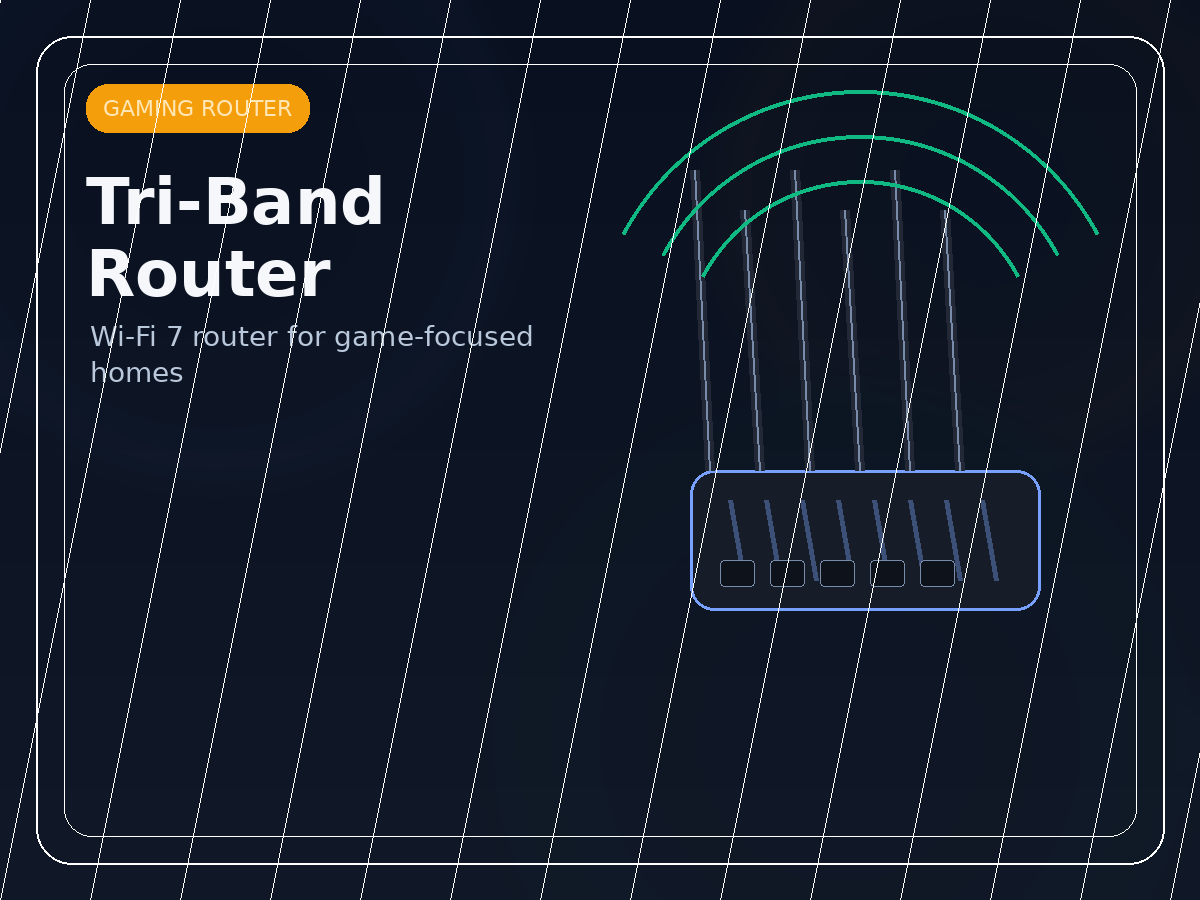
A gaming-router recommendation that fits comparison posts aimed at buyers who want WiFi 7, multi-gig ports, and dedicated gaming features at a lower price than flagship models.
- Tri-band BE11000 WiFi 7
- 320MHz support
- 2 x 5G plus 3 x 2.5G ports
- Dedicated gaming tools
- RGB gaming design
Why it stands out
- More approachable price tier
- Strong gaming-focused networking pitch
- Useful comparison option next to premium routers
Things to know
- Not as extreme as flagship router options
- Software preferences vary by buyer
The finite-dimensional prototype: oscillatory integrals and stationary phase
The core analytic structure is already present in integrals of the form
- $I(\hbar) = \int_{\mathbb R^n} e^{\frac{i}{\hbar}S(x)} a(x)\, dx$,
where $S$ is a smooth phase and $a$ is an amplitude. As $\hbar\to 0$, the dominant contributions come from critical points of $S$, where $\nabla S=0$. Under non-degeneracy assumptions, stationary phase gives an expansion
- $I(\hbar) \sim (2\pi\hbar)^{n/2} \sum_{x_} e^{__GCNKDDTOK_3__hbar}S(x_)} e^{i\frac{\pi}{4}\,\mathrm{sgn}(\mathrm{Hess}\,S(x_))} __GCNKDDTOK_7__det __GCNKDDTOK_8__,S(x_)|^{1/2}} + \cdots$.
The message is conceptual:
- Oscillations enforce cancellation away from critical points.
- Geometry of the Hessian controls both magnitude and phase corrections.
When you later see “sum over classical paths,” it is this stationary-phase mechanism being extended \to a space of paths.
From classical mechanics to an action functional
For a classical system with Lagrangian $L(q,\dot q)$, the action of a path $q(t)$ is
- $\mathcal S[q] = \int_{t_0}^{t_1} L(q(t),\dot q(t))\, dt$.
The Euler–Lagrange equation $\delta \mathcal S=0$ identifies critical paths: classical trajectories. In physics notation, the path integral proposes that the quantum transition amplitude should behave like
- “$\int e^{\frac{i}{\hbar}\mathcal S[q]}\, \mathcal Dq$”,
a formal analogue of the finite-dimensional oscillatory integral, with $\mathcal Dq$ standing in for a measure over paths.
Even before worrying about rigor, the analogy suggests a structure:
- contributions concentrate near classical paths when $\hbar$ is small,
- fluctuations around them are governed by a second-variation operator (a Hessian on path space),
- and phase corrections record the index of that operator.
Why naive measures on path space fail in the oscillatory case
A probability measure is defined by positivity and countable additivity. The oscillatory weight $e^{\frac{i}{\hbar}\mathcal S[q]}$ has modulus one, so it cannot define a finite positive measure. One can attempt complex measures or distributions, but then basic measure-theoretic tools break down: total variation tends to be infinite, and limits are extremely delicate.
What does work is to treat the path integral as a limit of discretizations.
- Choose a partition of $[t_0,t_1]$ into $N$ pieces.
- Replace a path by its values $q_0,\dots,q_N$.
- Approximate the action by a sum involving increments $q_{k+1}-q_k$.
- Integrate over $\mathbb R^{n(N-1)}$ with an oscillatory phase.
In this discrete setting, everything is finite-dimensional. The hard part is controlling the limit as $N\to\infty$ in a way that matches the operator theory of the quantum Hamiltonian.
The operator anchor: kernels and product formulas
For many systems, the real mathematical object behind the path integral is not an infinite-dimensional measure but a kernel of an operator. If $H$ is a self-adjoint Hamiltonian, then the unitary family $U(t)=e^{-itH}$ has an integral kernel in favorable settings, and that kernel is what physicists interpret as a “sum over paths.”
A robust bridge between discretization and operator theory is the Trotter product formula. For operators $A$ and $B$ under suitable conditions,
- $e^{-it(A+B)} = \lim_{N\to\infty} \left(e^{-itA/N} e^{-itB/N}\right)^N$,
with convergence in strong operator topology. In the basic Schrödinger case $H = -\frac{\hbar^2}{2m}\Delta + V$, one takes:
- $A = -\frac{\hbar^2}{2m}\Delta$ (the kinetic term),
- $B = V$ as a multiplication operator (the potential term).
Each factor has a known kernel. Multiplying kernels and integrating corresponds to integrating over intermediate positions $q_k$. The “path integral” appears as the limit of this repeated composition.
This perspective clarifies what is honest:
- The limit is an operator limit, not a measure limit.
- The discrete integrals are real integrals with explicit kernels.
- Convergence requires assumptions on $V$ and on operator domains.
The Euclidean surrogate and heat-kernel measures
There is a closely related construction that does produce an actual measure: replace $it$ by a real parameter and study the contraction semigroup $e^{-tH}$. In many cases, $e^{-tH}$ has a positive kernel and can be represented by expectations over Brownian paths, leading to the Feynman–Kac formula.
From the viewpoint of path integrals, this is a decisive point:
- The Euclidean (heat-kernel) version is measure-theoretically well-behaved.
- The oscillatory version is not, but it can often be recovered by analytic continuation in controlled settings.
This is one reason the word “rigorous” is frequently attached to Euclidean functional integrals: the underlying analytic category is different.
Stationary phase on path space: semiclassical formulas
Even when the oscillatory integral cannot be interpreted as a genuine measure, semiclassical asymptotics often remain valid because stationary phase is fundamentally about cancellation, not probability.
In the simplest settings, one obtains approximations of the form
- kernel approximately a sum over classical trajectories,
- amplitude determined by a determinant of the second variation operator,
- phase corrections determined by an index count (Maslov-type corrections).
Several subtleties matter for honest semiclassical work.
- The relevant determinant is typically a regularized determinant of a differential operator.
- Caustics occur when the second variation becomes degenerate; the stationary-phase approximation must then be replaced by uniform asymptotics.
- Multiple classical paths can contribute; interference is not a small perturbation but the whole phenomenon.
The moral is that semiclassical expansions are real analysis problems about oscillatory integrals with large parameters, extended to infinite-dimensional limits through operator-controlled discretizations.
Fluctuation operators and regularized determinants
In finite dimensions, the stationary-phase amplitude involves $|\det \mathrm{Hess}\,S|^{-1/2}$. On path spaces, the second variation becomes a differential operator along a classical trajectory, often a Sturm–Liouville type operator with boundary conditions induced by the endpoints. The corresponding “determinant” must be interpreted through regularization. Common tools include \zeta-function regularization, Gel’fand–Yaglom formulas in one-dimensional settings, and determinant ratios that cancel infinities between a reference operator and the fluctuation operator of interest.
This is not an optional technicality. Many semiclassical prefactors depend on boundary conditions and on how conjugate points enter the spectrum of the fluctuation operator. When these details are tracked correctly, the prefactor changes precisely when the geometry of the classical trajectory develops caustics, matching the phase-index corrections that appear in more geometric treatments.
Gauge fields and phase consistency
When a particle is coupled \to a gauge potential, the action includes terms like $\int A(q)\cdot dq$. This introduces phase factors that depend on line integrals. Even in classical electromagnetism, global consistency can fail on topologically nontrivial configuration spaces, and local potentials must be patched. In path-integral language, that patching shows up as:
- local expressions for the phase,
- compatibility conditions on overlaps,
- and quantization conditions that prevent ambiguity in the overall amplitude.
The key point is not that gauge theory is exotic. It is that the path integral is sensitive to global geometric data because phases remember holonomy.
What “rigorous path integral” usually means in practice
In mathematical physics literature, a statement that resembles a path-integral formula is most often justified by one of the following strategies.
- Prove an operator identity, then interpret it in kernel form, using Trotter product formulas or Fourier transform techniques.
- Work in Euclidean signature where probability measures exist, then use analytic continuation or reflection positivity to connect to oscillatory quantities.
- Use semiclassical analysis: derive asymptotics from stationary phase and control remainders by microlocal estimates.
All three strategies have a common trait: they avoid pretending there is a straightforward oscillatory measure on path space.
Common mistakes that make path integrals look easier than they are
The path integral becomes misleading when formal manipulations are treated as if they were dominated-convergence arguments.
- Swapping limits and integrals without a topology that controls oscillatory cancellation.
- Treating $\mathcal Dq$ as if it were translation-invariant Lebesgue measure on an infinite-dimensional space.
- Ignoring boundary and domain issues that are visible in the corresponding operator formulation.
- Assuming stationary phase applies without checking non-degeneracy or accounting for caustics.
A safer habit is to keep asking: which operator statement is this formula encoding? If you can point to the operator identity, you can usually recover the correct analytic conditions.
Further reading
For rigorous bridges between operator theory, semiclassical analysis, and functional integrals:
- Reed and Simon, Methods of Modern Mathematical Physics, for Trotter product formulas and operator foundations.
- Dimassi and Sjöstrand, Spectral Asymptotics in the Semi-Classical Limit, for stationary phase and microlocal control.
- Simon, Functional Integration and Quantum Physics, for Euclidean functional integrals and their operator connections.
Books by Drew Higgins


Bible Study / Spiritual Warfare
Ephesians 6 Field Guide: Spiritual Warfare and the Full Armor of God
Spiritual warfare is real—but it was never meant to turn your life into panic, obsession, or…


Leave a Reply