Psychology and cognitive science aim to explain mind and behavior with the same seriousness that physics applies to matter and motion. That ambition is difficult because the objects of study are partly hidden. We do not observe “attention,” “memory,” “anxiety,” or “belief” directly. We observe behavior, language, physiology, and neural proxies, then infer latent constructs through models. The greatest strength of the field is that it can connect internal processes to measurable outcomes. The greatest risk is that inference chains can look precise while resting on fragile assumptions.
Research-grade psychology and cognitive science therefore depend on disciplined evidence chains. A trustworthy claim is one where the path from measurement to interpretation is explicit, testable, and robust to reasonable variation in method and analysis.
Value WiFi 7 RouterTri-Band Gaming RouterTP-Link Tri-Band BE11000 Wi-Fi 7 Gaming Router Archer GE650
TP-Link Tri-Band BE11000 Wi-Fi 7 Gaming Router Archer GE650
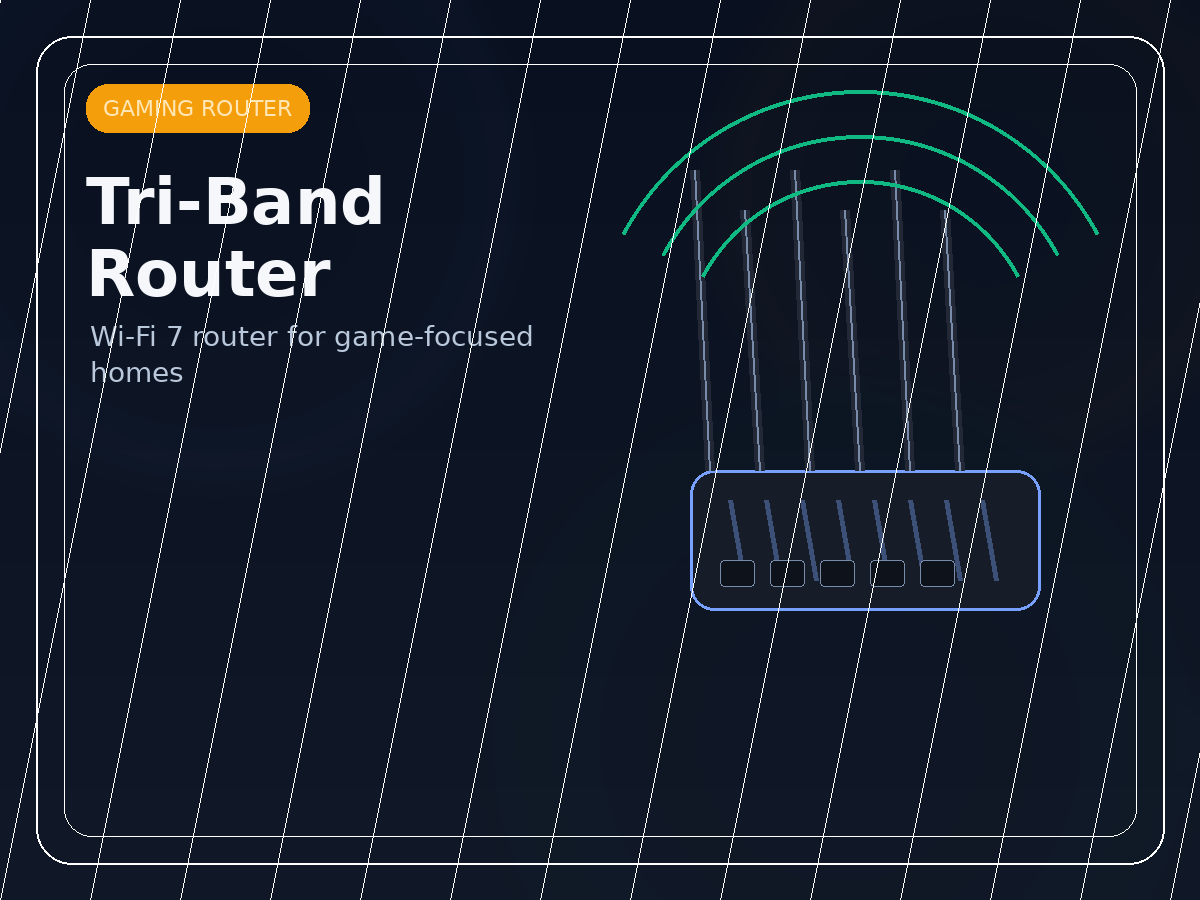
A gaming-router recommendation that fits comparison posts aimed at buyers who want WiFi 7, multi-gig ports, and dedicated gaming features at a lower price than flagship models.
- Tri-band BE11000 WiFi 7
- 320MHz support
- 2 x 5G plus 3 x 2.5G ports
- Dedicated gaming tools
- RGB gaming design
Why it stands out
- More approachable price tier
- Strong gaming-focused networking pitch
- Useful comparison option next to premium routers
Things to know
- Not as extreme as flagship router options
- Software preferences vary by buyer
This toolkit is organized around three pillars.
- Measurements: what your instruments and tasks truly measure.
- Models: how you convert measurements into claims about latent processes.
- Checks: how you pressure-test conclusions against confounding, bias, and uncertainty.
Measurement pillar: what the field actually measures
Tasks are measurement instruments with hidden demands
A cognitive task is an instrument. It imposes demands beyond what the experimenter intends.
A “working memory” task also involves:
- Attention allocation and sustaining task engagement.
- Strategy use and instruction interpretation.
- Motor response preparation and speed-accuracy trade-offs.
- Motivation and fatigue.
A “perception” task also involves:
- Decision criteria and willingness to guess.
- Response bias induced by payoff structure.
- Prior expectations formed during the session.
Robust measurement practice:
- Describe the task precisely: stimuli, timing, instructions, feedback.
- Identify the most likely unintended demands and measure proxies for them when possible.
- Use multiple tasks that purportedly measure the same construct to reduce task-specific confounding.
- Pilot the task to identify floor and ceiling effects.
If a construct is inferred from one task, the claim is often fragile. Multiple tasks provide triangulation.
Self-report measures internal states, but with context dependence
Self-report is essential, but it is not a direct readout of internal state.
Self-report depends on:
- Language and cultural norms.
- Social desirability and self-presentation.
- Introspection limits and memory biases.
- The reference frame used (“compared to last week,” “compared to others,” “in general”).
Robust self-report practice:
- Use validated scales with known psychometric properties.
- Report reliability in the current sample, not only in past literature.
- Use multiple forms: trait and state measures, daily diaries, and context-specific prompts.
- Pair self-report with behavioral or physiological measures when the claim is high-stakes.
Self-report is best treated as one evidence stream, not the whole story.
Reaction time and accuracy are proxies with multiple causes
Reaction time (RT) and accuracy are common outcomes, but they are composite.
RT reflects:
- Sensory processing time.
- Decision time.
- Motor execution time.
- Caution and strategy.
- Attention lapses and mind-wandering.
Accuracy reflects:
- Evidence quality.
- Decision threshold.
- Guessing strategy.
- Speed-accuracy policies.
Robust practice:
- Analyze RT distributions, not only means; lapses appear in tails.
- Use diffusion-like models cautiously and validate assumptions.
- Report both RT and accuracy; interpreting one alone can be misleading.
- Include measures of variability and lapses.
A small RT effect can come from a large change in a \subset of trials, which implies a different mechanism than a uniform shift.
Physiological measures are proxies with their own confounds
Psychophysiology offers valuable signals: heart rate variability, skin conductance, pupil dilation, respiration, and hormone assays.
Each has confounds:
- Motion and posture changes.
- Temperature and hydration status.
- Baseline differences across individuals.
- Time-of-day influences.
- Context and novelty effects.
Robust practice:
- Control environment and record relevant covariates.
- Use baseline correction methods that are justified and reported.
- Align measurement timing to the phenomenon; some signals respond quickly, others slowly.
- Use multiple physiological measures when interpreting “arousal” or “stress.”
Physiology is powerful when it is treated as a measurement chain with known limits, not as a direct window into “emotion.”
Neurocognitive proxies require measurement models
Neural measures—EEG, MEG, fMRI, and related methods—are increasingly used in cognitive science. They require explicit measurement models because the signal is not the process.
Robust practice:
- State what the neural measure is sensitive to and what it averages over.
- Avoid reverse inference: “region X active therefore process Y,” unless supported by constrained evidence.
- Use preregistered analysis plans when multiple comparisons are large.
- Use replication and external validation when claims are strong.
Neural evidence is best used to constrain models, not to replace behavioral measurement.
Model pillar: turning measurements into claims
Latent-variable models: constructs must be earned
Many constructs are latent: they are inferred from patterns across measurements.
Common model families:
- Factor models and item response models for psychometrics.
- State-space models for dynamic internal states across time.
- Evidence-accumulation models for choice and RT.
- Reinforcement-like learning models described as feedback-based updating models.
Robust latent modeling requires:
- Clear mapping assumptions: which measurement indicates which latent factor.
- Identifiability checks: whether different parameter settings produce similar predictions.
- Out-of-sample validation: whether the model predicts new conditions.
- Sensitivity checks: whether conclusions depend on one item or one task.
A construct is credible when it predicts behavior across tasks and contexts, not when it fits one dataset.
Causal inference: design matters more than statistics
Causal claims in psychology are vulnerable to confounds: baseline differences, demand characteristics, and unmeasured context effects.
Strong causal evidence comes from:
- Randomized designs with careful control conditions.
- Within-subject designs that reduce baseline variability.
- Natural experiments with strong assumptions and sensitivity checks.
- Time series with intervention points and pre-trend verification.
A robust project aligns claim strength to design strength. If the design supports association, the writing should reflect that.
Mechanistic models: micro-mechanisms must connect to observable predictions
Cognitive mechanisms should be judged by what they predict.
A robust mechanistic model:
- Predicts patterns across multiple dependent measures, not only one.
- Predicts effects of perturbations: instructions, incentives, cognitive load, or sensory noise.
- Predicts time course: when effects appear and how they decay.
Mechanistic models are strongest when they generate risky predictions that could be wrong.
Generalization: the hidden boundary of every study
Psychology and cognitive science often generalize from specific samples and tasks.
Robust generalization practice:
- Define the population: who was studied and who was not.
- Avoid overstating universality when cultural and contextual factors could matter.
- Use multi-site studies or diverse samples when claims aim for broad generality.
- Report heterogeneity: effects can vary across individuals and contexts.
Generalization is a scientific claim that must be supported, not a default assumption.
Checks pillar: preventing false confidence
Sampling bias and representativeness
Many psychology studies rely on convenience samples. If the sample differs systematically from the intended population, conclusions can mislead.
Robust practice:
- Describe the sample and recruitment channel.
- Measure key demographics and context variables.
- When possible, recruit more diverse samples or replicate across samples.
- Avoid language that implies universality if sample scope is narrow.
Demand characteristics and expectancy effects
Participants can infer what is expected and change behavior accordingly.
Robust safeguards:
- Use deception only when ethically justified and approved.
- Use cover stories and filler tasks when appropriate.
- Measure participant expectations in debriefing.
- Use objective outcomes when possible and minimize cues in instructions.
Expectancy effects are not rare; they are a default risk in human experiments.
Multiple comparisons and analysis flexibility
High-dimensional behavioral and neural data invite flexible analysis. Without discipline, false patterns can appear.
Robust practice:
- Preregister primary outcomes and analysis plans for confirmatory claims.
- Separate exploratory analyses from confirmatory conclusions.
- Use correction methods for multiple comparisons and report them.
- Perform sensitivity checks across reasonable preprocessing choices.
Replication and robustness across tasks
Replication is stronger when it crosses task forms.
- Replicate using different stimuli.
- Replicate using a different task that targets the same construct.
- Replicate in a different sample and context.
If an effect appears only under one task variant, it may reflect a task artifact rather than a general cognitive mechanism.
Measurement invariance: do scales mean the same thing across groups?
Comparing groups requires that the measurement instrument functions similarly across groups. If items have different meanings, group differences can reflect measurement drift.
Robust practice:
- Test measurement invariance when comparing groups.
- Report reliability by group.
- Interpret group comparisons cautiously when invariance fails.
A compact toolkit table
| Toolkit element | What it prevents | Practical action |
|—|—|—|
| Multi-task triangulation | Task-specific artifacts | Use multiple tasks per construct |
| Psychometric reporting | Hidden scale weakness | Report reliability and invariance checks |
| RT distribution analysis | Mean-based misinterpretation | Analyze tails, lapses, and variability |
| Demand control | Expectancy-driven effects | Mask hypotheses and measure expectations |
| Preregistered primary analyses | Flexible analysis bias | Lock outcomes and pipelines for confirmation |
| Cross-sample replication | Narrow generalization | Replicate across samples and contexts |
| Latent model validation | Overfit constructs | Predict new conditions and tasks |
Closing: the field becomes reliable when inference chains are explicit
Psychology and cognitive science are at their best when they combine humility about measurement with ambition about explanation. The field’s objects—internal processes—are not directly observed, so the discipline must be built into design and analysis.
When measurement chains are explicit, models are validated out of sample, and checks are used to challenge conclusions, results become durable. They can inform theory, education, clinical practice, and public understanding without collapsing under scrutiny. That is the purpose of this toolkit: \to make trust the default outcome of careful psychological science, not a hope after the fact.
Books by Drew Higgins

Prophecy and Its Meaning for Today
New Testament Prophecies and Their Meaning for Today
A focused study of New Testament prophecy and why it still matters for believers now.


Leave a Reply