Quantum physics is not only a set of equations. It is a set of engineered practices that make extremely subtle phenomena measurable. The engineer’s view treats quantum systems as constrained devices: they must be prepared, controlled, and read out under noise, drift, and imperfect detectors. Quantum behavior is not fragile because the theory is weak. It is fragile in certain experiments because coherence and phase stability demand strict environmental control.
This article frames quantum physics through constraints, trade-offs, and robustness mechanisms. The purpose is practical: better experiment design, better interpretation, and safer claims.
Value WiFi 7 RouterTri-Band Gaming RouterTP-Link Tri-Band BE11000 Wi-Fi 7 Gaming Router Archer GE650
TP-Link Tri-Band BE11000 Wi-Fi 7 Gaming Router Archer GE650
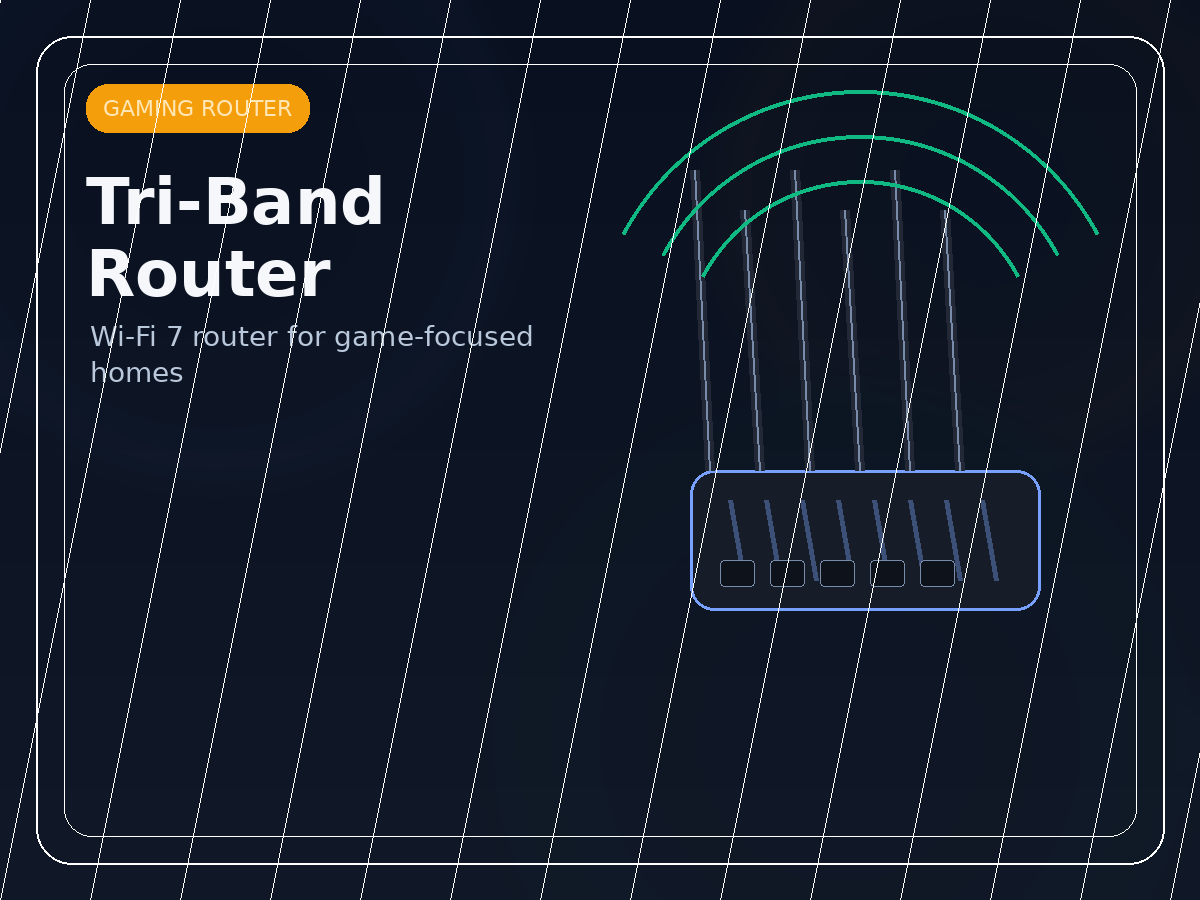
A gaming-router recommendation that fits comparison posts aimed at buyers who want WiFi 7, multi-gig ports, and dedicated gaming features at a lower price than flagship models.
- Tri-band BE11000 WiFi 7
- 320MHz support
- 2 x 5G plus 3 x 2.5G ports
- Dedicated gaming tools
- RGB gaming design
Why it stands out
- More approachable price tier
- Strong gaming-focused networking pitch
- Useful comparison option next to premium routers
Things to know
- Not as extreme as flagship router options
- Software preferences vary by buyer
The constraint stack of quantum systems
Quantum experiments face constraints that often dominate outcomes.
- Decoherence: loss of phase coherence due to environmental coupling.
- Relaxation: energy decay processes that reset populations.
- Control error: pulse amplitude and timing drift, crosstalk, leakage to unwanted levels.
- Detector imperfections: finite efficiency, background events, dead time, jitter.
- Thermal effects: residual populations and temperature drift that change rates.
- Environmental noise: magnetic field fluctuations, charge noise, vibrations, acoustic coupling.
- Calibration drift: parameters shift over hours and days.
- Finite sampling: shot noise and counting statistics limit resolution.
Robust quantum work begins by measuring these constraints and treating them as first-class variables, not as afterthoughts.
Trade-offs engineers manage in quantum physics
Coherence versus control strength
Strong control pulses can implement fast operations, but they can also introduce unwanted excitations, heating, and leakage. Weak control reduces disturbance but can be too slow relative to decoherence.
Robust practice:
- Map performance versus pulse amplitude and duration.
- Use shaped pulses to reduce spectral leakage.
- Verify that faster control does not create hidden errors that only appear in certain sequences.
Isolation versus access
Isolating a system reduces noise but makes it harder to control and measure.
Examples:
- Better shielding reduces field noise but complicates wiring.
- Lower temperature reduces thermal populations but increases engineering complexity.
- Vacuum improves stability but complicates optics and alignment.
Robust designs plan access: reference channels, calibration signals, and monitoring probes that remain available within the isolation stack.
Model detail versus identifiability
Quantum devices can be modeled in extreme detail, but detailed models can be underconstrained by data.
Robust practice:
- Use reduced models for inference when possible.
- Fit across multiple settings with shared parameters.
- Add complexity only when residual structure demands it.
Averaging versus drift
Long averaging reduces random noise, but drift can create false trends.
Robust practice:
- Use interleaved sequences: alternate conditions rapidly to cancel drift.
- Track drift variables: temperature, laser power, field proxies.
- Prefer many shorter runs with drift checks over one long run.
Example: why coherence claims must include the measurement protocol
Two experiments can report different “coherence \times” for the same device because they used different protocols that probe different noise bands. A time-domain protocol sensitive to slow drift will report a different timescale than a protocol that refocuses slow drift.
Robust practice:
- State the protocol used and what noise it is sensitive \to.
- Report multiple timescales when relevant rather than one number.
- Connect protocol results to noise measurements where feasible.
This example shows the engineer’s principle: a performance number is meaningful only with its measurement definition.
Robustness mechanisms that make quantum experiments work
Differential measurement and common-mode rejection
Many successful quantum experiments use differential designs.
- Interferometers compare two paths and cancel common noise.
- Qubit calibration sequences compare outcomes to reference sequences.
- Correlation experiments use coincidence logic to suppress unrelated background.
Differential design is powerful because it attacks the largest noise sources directly.
Feedback and stabilization loops
Stabilization is often essential.
- Laser frequency locks.
- Phase locks for interferometers.
- Active temperature control.
- Magnetic field stabilization.
Robust practice measures loop performance: bandwidth, residual error, and failure modes. Control signals themselves are diagnostic and should be logged.
Randomization and interleaving
Randomizing measurement setting order prevents drift from aligning with settings. Interleaving conditions makes comparisons less sensitive to slow drift.
This is a general robustness pattern: design the experiment so that the most plausible artifact (drift) cancels rather than accumulates.
Redundancy: multiple ways to estimate the same parameter
Robust projects estimate key parameters multiple ways.
- Coherence metrics via time-domain sequences and via spectral linewidth.
- Coupling strength via spectroscopy and via time-domain oscillations.
- Detector background via blocked-path runs and via off-window coincidence estimates.
Redundancy builds trust because different methods fail differently.
Transparent pipelines with versioning
Modern quantum experiments rely on software pipelines: fitting routines, tomography, calibration procedures, and control optimization.
Robust practice:
- Version control code and configuration.
- Log instrument settings and calibration parameters automatically.
- Use reproducible scripts that rebuild results from raw data.
- Include checksums for data integrity.
This turns analysis into an accountable instrument.
Trade-off: stronger certification versus wider applicability
Some of the most rigorous quantum demonstrations require narrow conditions: low temperature, high vacuum, careful shielding, and specialized detectors. These conditions enable strong certification but can limit applicability.
Robust practice separates:
- What is demonstrated in the high-control regime.
- What performance persists when constraints are relaxed.
- Which constraints are essential and which are engineering choices.
This separation prevents overgeneralizing a laboratory demonstration into a universal statement about all platforms.
A constraint-oriented summary table
| Constraint | Typical failure | Robust response |
|—|—|—|
| Decoherence | Lost interference | Measure coherence and design sequences within it |
| Control drift | Apparent state changes | Interleaving, recalibration, drift logging |
| Detector background | False correlations | Background runs and correction uncertainty |
| Leakage | Hidden error channels | Pulse shaping and spectroscopy checks |
| Drift during averaging | False trends | Short runs, interleaved conditions, null tests |
| Overfitting models | False confidence | Reduced models and identifiability tests |
Statistical design: treat count data as a planning object
In quantum physics, the planned number of trials determines what effects can be resolved. A small difference in correlation can require large sample sizes when background is significant.
Robust practice:
- Estimate required counts based on expected effect size and background rate.
- Plan interleaving to reduce drift effects.
- Use confidence intervals that include systematic uncertainty from detector calibration.
- Avoid declaring “no effect” without stating what effect sizes were resolvable.
This approach makes null results informative rather than ambiguous.
Closing: quantum physics as engineered measurement under constraint
Quantum physics becomes practical and trustworthy when it is treated as engineered measurement under constraint. The theory provides probability rules. The experiment provides calibrated statistics. Robustness practices—differential design, stabilization, interleaving, redundancy, and reproducible pipelines—are what make subtle quantum effects measurable and what keep interpretation honest.
This engineer’s view does not reduce the field. It strengthens it. It replaces mystery with discipline and turns quantum claims into results that can be repeated, compared, and trusted.
Deployment discipline: devices force clarity
When quantum ideas become devices, ambiguity becomes expensive. A device must operate under drift, temperature variation, and imperfect detectors. This forces a culture of:
- Continuous calibration and monitoring.
- Versioned control software.
- Automated diagnostic checks that detect when assumptions fail.
Device culture is a powerful truth filter because it punishes fragile interpretations quickly. If a claim cannot be stabilized in operation, it is often not a robust phenomenon in that regime.
Interpretation discipline: distinguish observation from explanation
Engineers and physicists often detect an effect before they know its full mechanism. That is normal. The danger is to present a preferred explanation as if it were already certified.
Robust practice:
- Present the measured effect with full uncertainty and null tests.
- List the main alternative explanations tied to plausible artifacts.
- Propose follow-up measurements that would separate explanations.
- Keep mechanistic claims aligned with what has actually been tested.
This discipline is what allows quantum physics to remain cumulative: measurements endure even as explanations refine.
Finally, robustness in quantum work includes careful language about benchmarks. A reported fidelity or error rate is meaningful only when the benchmark definition, dataset, and calibration procedure are stated. Two groups can report different numbers for the same device because they benchmarked different operations or used different thresholds. A robust report therefore includes the benchmark protocol and shows how results change under small analysis variations. This protects readers from treating a number as platform-independent when it is actually protocol-dependent.
A useful habit is to publish a short “assumptions ledger” alongside results: what detector corrections were applied, what noise terms were included, what calibration references were used, and what analysis thresholds were chosen. This ledger makes it easy for others to reproduce the work and to understand disagreement when it arises. It also helps the original team debug drift and identify when a device has moved into a different regime.
Another robustness theme is cross-platform translation. Techniques developed for one platform—stabilization loops, interleaved calibration, randomized sequences, and error budgeting—often transfer to others even when the physical implementation differs. This transfer is a sign that the robustness mechanisms are real and general: they address measurement and inference constraints that appear in many quantum settings.
In short, quantum robustness is not a slogan. It is a set of repeatable engineering and inference practices that turn subtle probability rules into dependable measured reality. It is the daily discipline behind the field’s most trusted results. That is also why quantum technology is steadily becoming more practical. Under real-world constraints. And careful reporting. Always. Yes.
Books by Drew Higgins


Prophecy and Its Meaning for Today
New Testament Prophecies and Their Meaning for Today
A focused study of New Testament prophecy and why it still matters for believers now.

Leave a Reply